
—
Brassai, Valerie Belin, Atelier de Baldus, Rene Barthelemy, Theophile Feau, Alexandre Ferrier / 100 shots of France — French photographs from beginnings to our days
Хабаровск. В рамках фестиваля Год Россия - Франция 2010
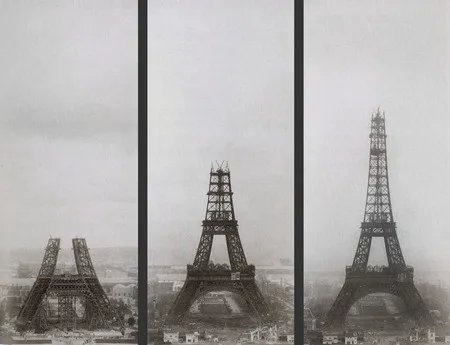
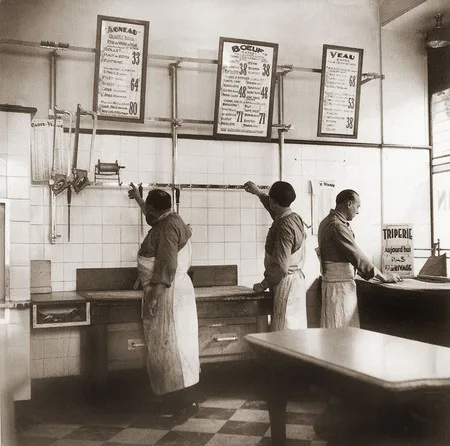
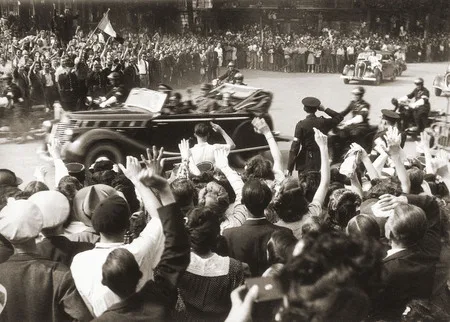
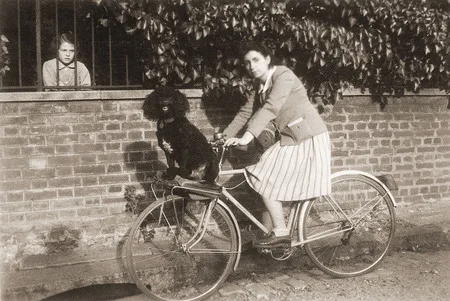
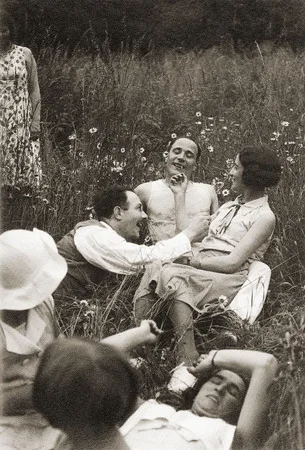
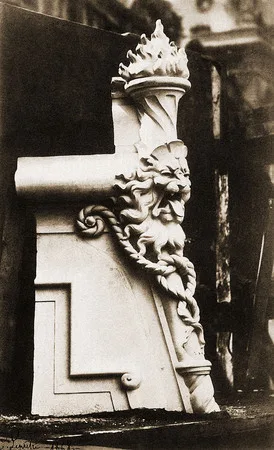
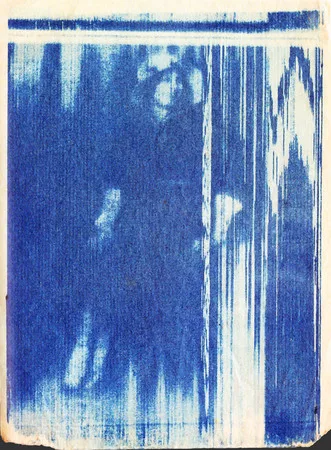
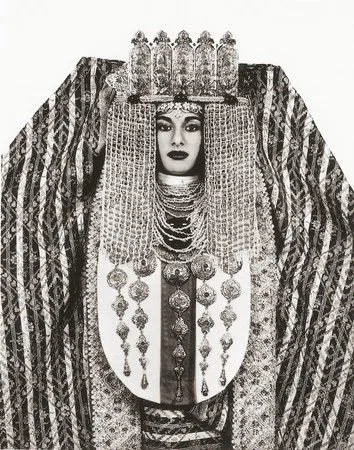
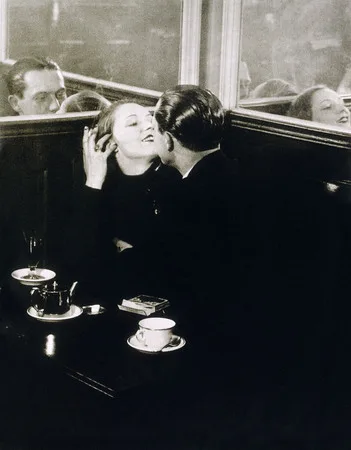
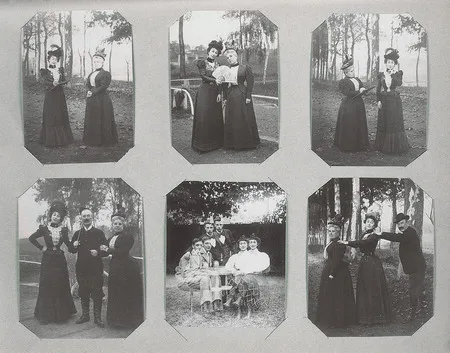
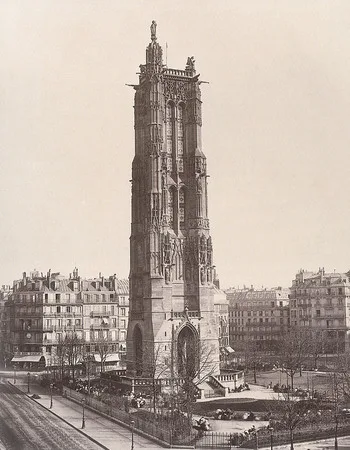
Theophile Feau. Building the Eiffel Tower . June 1888, 14 November 1888 and 20 January 1889 The Universal Exhibition of 1889 celebrated the centenary of the French Revolution. Parisian families went to admire the construction of the tower built by engineer Gustave Eiffel (1832–1923). Built to last only the duration of the Exhibition, it was saved in 1909 by the installation of a radio receiver at the summit. Modern print made in 2007 from the original proof in the Musee d’Orsay. Paris. Musee d’Orsay, Paris. A donation by Mme Bernard Granet and her children and Melle Solange Granet, Gustave Eiffel’s descendants. FEAU Theophile © Musee d’Orsay, Paris / dist. RMN 67
Exhibition Curator: Sophie Sch
In memory of Janine Niepce
‘What the photographer reproduces infinitely only takes place once: it repeats mechanically things that could never be repeated existentially.’ Roland Barthes.
The emotion felt by the whole world at the discovery of photography in 1839 is understandable. A dream had become reality.
This project tells a story that began officially in Paris and continues to this day.
The works presented were selected from thousands of prints kept in three major world collections: the French National Library, the Musee d’Orsay and the Pompidou Centre in Paris.
The exhibition was assisted by the French Culture Ministry, the Paris Ecole des Beaux-Arts, the Jacques Henri Lartigue Foundation, the Brassai Foundation, private collectors, the photographers and their descendants.
Each of these prints is accompanied by a text with the history of the photograph and photographer that also tells us something about France and the French, and Paris. Choosing a single print by each photographer has enabled us to show the work of artists all too rarely exhibited such as Edouard Baldus, Charles Marville or Auguste Collard, along with photographs by acclaimed geniuses like Nicephore Niepce, Louis-Adolphe Humbert de Molard, Gustave Le Gray, Charles Negre, Eugene Cuvellier, the Bisson brothers, Felix Nadar and Eugene Atget. There are prints by anonymous amateurs and also famous names such as Jacques Henri Lartigue or Count Robert de Montesquiou.
Photography cannot be fully comprehended without understanding technique. In the early years it was gradually developed by rich inventors passionate about taking pictures. With the evolution of technical mastery (reproduction of prints, shortening exposure time...) it was commercialised by talented photographers such as Felix Nadar or Mayer and Pierson. A tool for imperial propaganda under Napoleon III
But photography also straddles both art and science. In 1839 the minister and scholar Francois Arago predicted how it would soon assume a scientific role. This ‘repertory of images’ was sorted, classified, compared and analysed by the Henry astronomer brothers, Alphonse Bertillon the founder of the Parisian Legal Identity service, the psychiatrist Dr Raviart and physiologist Jules Marey. Duchenne de Boulogne, another physiologist, decided to give his ‘repertory of expressions’ to students of the Ecole des Beaux-Arts in Paris.
Outstanding French photographers Charles Negre and Gustave Le Gray had been also painters. Respected artists like Eugene Delacroix or Edgar Degas used it to build a ‘repertory of iconographic poses’.
At the beginning of the 20th century pictorialists such as Constant Puyo hoped to achieve a result close to painting by their composition of photographic studies and by elements added during printing. After the chaos of the First World War the Surrealists played with technical experimentation. For Man Ray, Dora Maar or Raoul Ubac photography was no longer ‘representation’, but also the ‘purpose’ of the creation.
After 1930 humanist photographers such as Brassai, Andre Kertesz and Robert Doisneau went looking for a poetic Paris, the city of street urchins, louts and lovers. With the growth of the press, Janine Niepce and Sabine Weiss became photo reporters covering political and social news. Photography was omnipresent in magazines and books, walls were plastered with poster photographs. Fashion photographer Frank Horvat preferred the street to any studio. More and more agencies appeared. Amongst the founders of the Magnum agency in 1947, Henri Cartier-Bresson hunted for the ‘decisive moment’. Together with Martine Franck and Raymond Depardon the photographer directly controlled the use and commercialisation of his work. ‘Photojournalist’ Gilles Caron covered the latest news. Jeanloup Sieff scattered photographs like pebbles as he traced his personal story. Agnes Varda immortalised Gerard Philipe on stage at the Avignon Festival before concentrating on ‘contemporary’ creation.
In the last quarter of the 20th century photography was only one short step from the plastic arts. With Bernard Faucon, Patrick Tosani, Valerie Belin, Frank Perrin and Valerie Jouve photography became a creative medium used by conceptual artists. For Georges Rousse and Bernard Plossu it represents ‘memory’, Jean-Marc Bustamante transforms it into a ‘Tableau’, and Bertrand Lavier is not even a photographer.
In this exhibition we would like to emphasise the extraordinary vitality of a creative art that made its debut in France less than two centuries ago.
Above all the aim of this project is to enable every one of us to tell his or her own story.
‘Photography does not (necessarily) show what no longer exists, but only and certainly what has existed.’ Roland Barthes, ‘La Chambre Claire’, Note on photography, 1980.
Sophie Schmit Exhibition curator
NB: For purposes of conversation the historic photographs presented in this exhibition have been printed using contemporary techniques by owners of the originals, under their supervision.
Exhibition curator
Sophie Schmit is an art historian, journalist and independent curator. Her most recent exhibitions are ‘Paris in Shanghai. Three Generations of French Photographers’ (Fine Art Museum, Shanghai, 2005), ‘Odessa’s Ghosts’ by Christian Boltanski (Biennale of Contemporary Art, Moscow, 2005) and ‘The Third Eye. Photography and the Occult’ (Maison Europeenne de la Photographie, Paris,
Where it was shown
Дальневосточный художественный музейХабаровскХабаровск
5—23 March 2010
Национальный художественный музей Республики Саха (Якутия)Якутскул. Кирова, 9
6 April — 10 May 2010
Supported by
