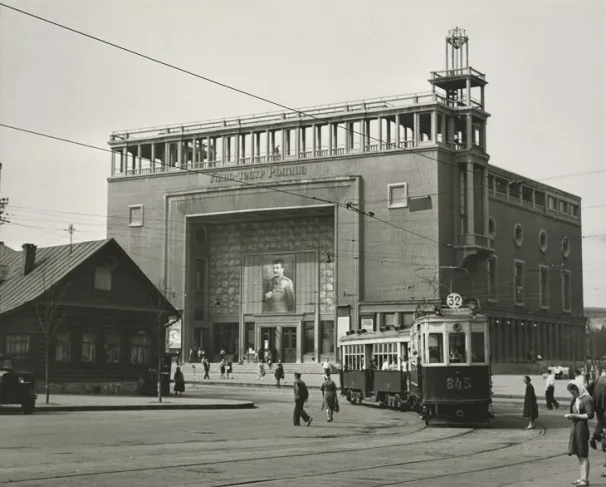
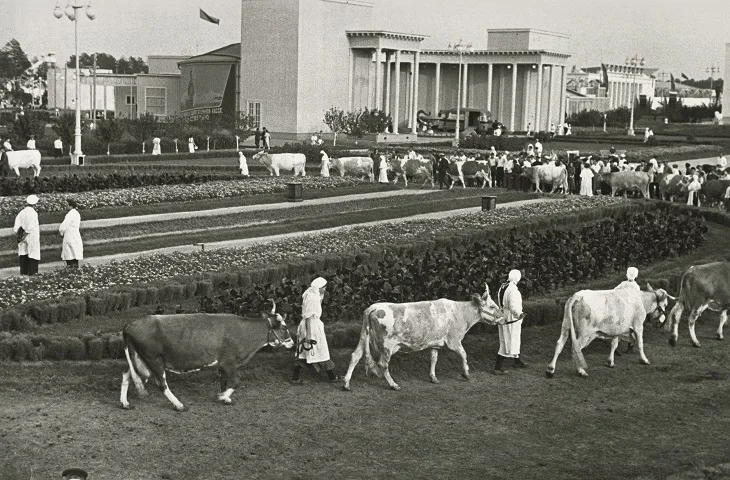
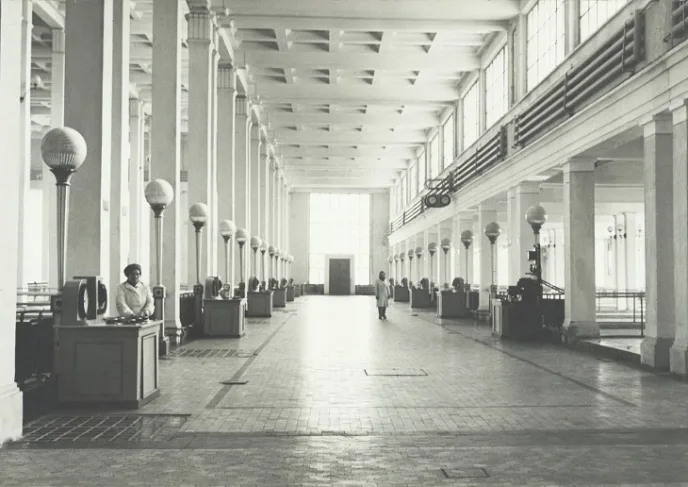
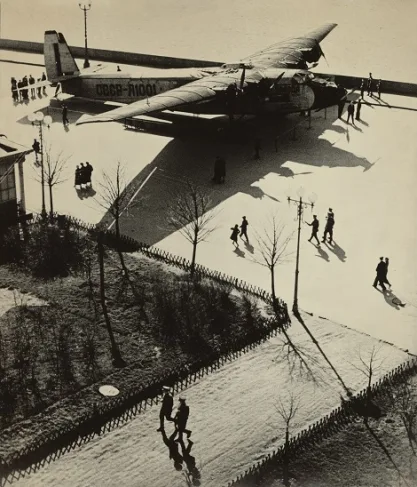
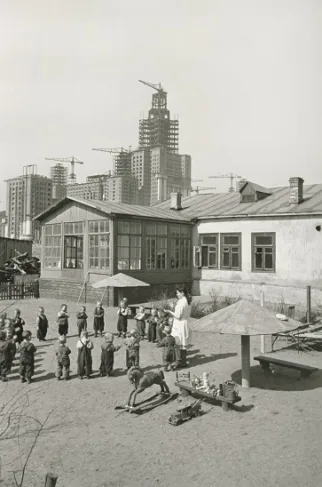
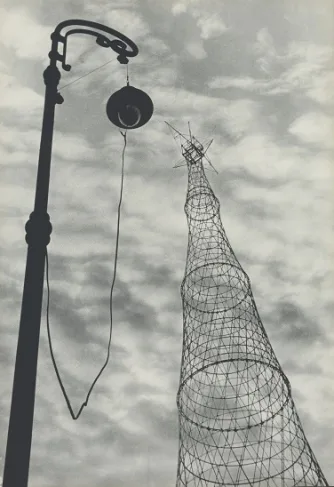
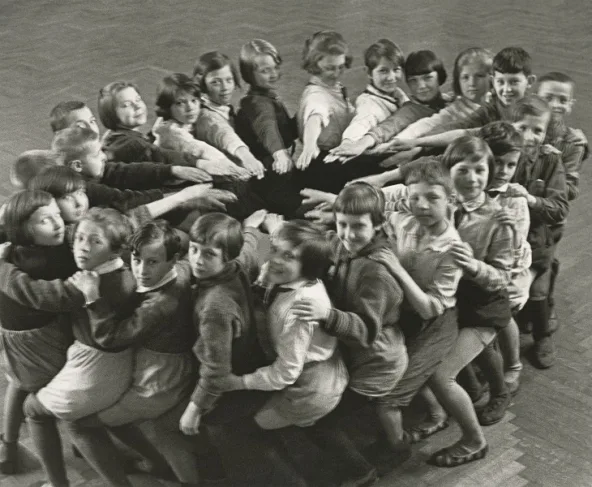
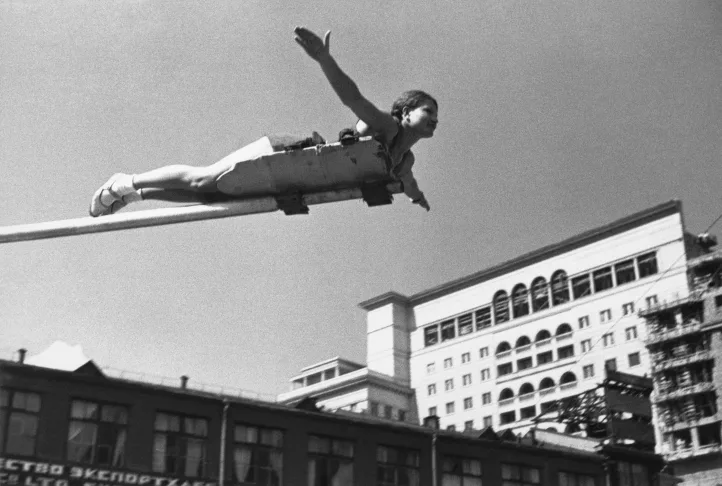
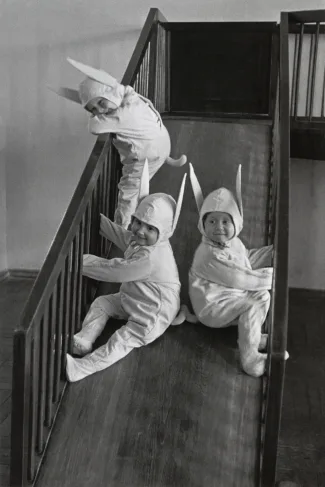
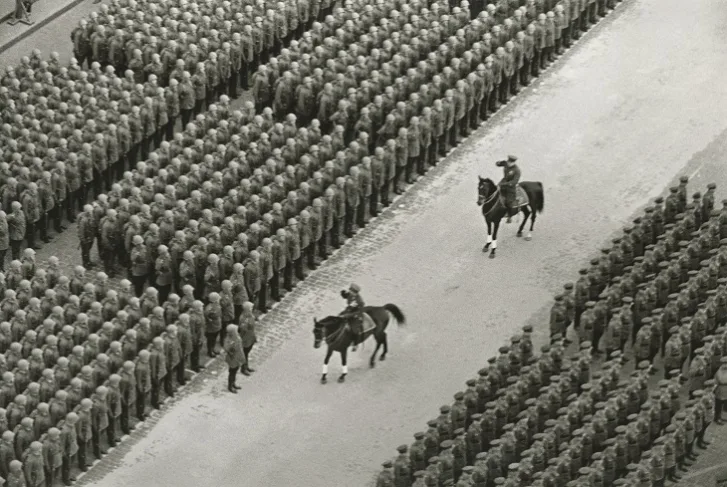
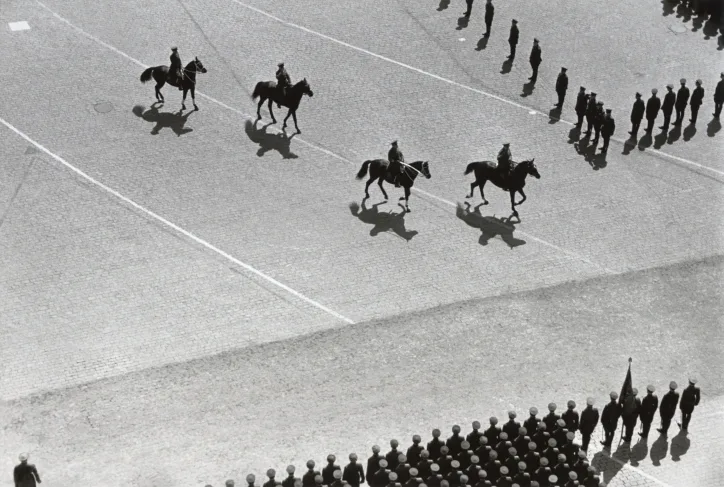
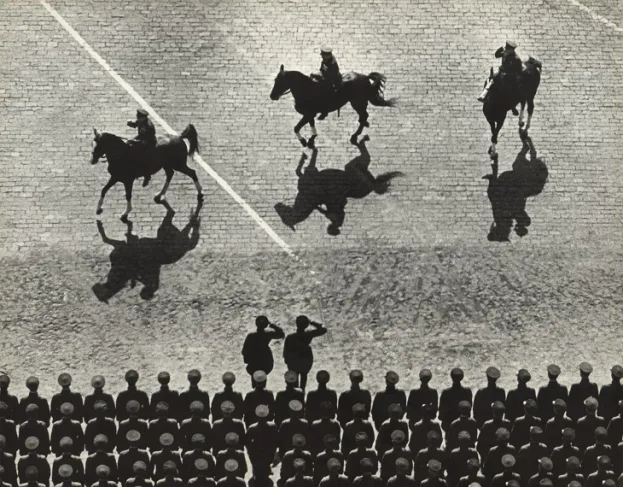
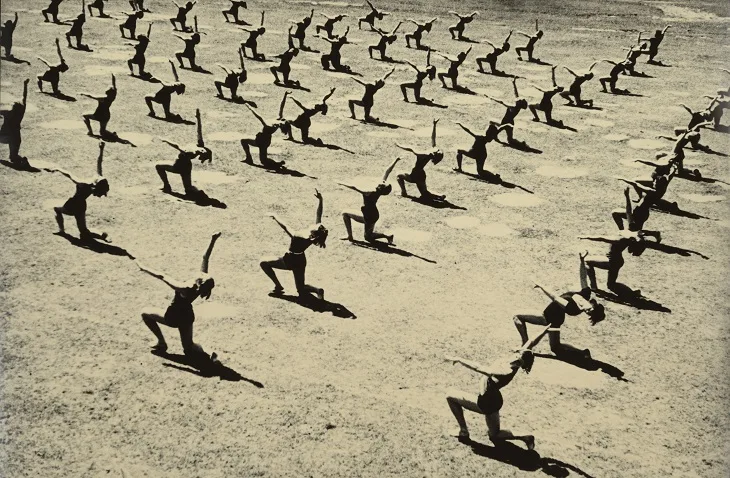
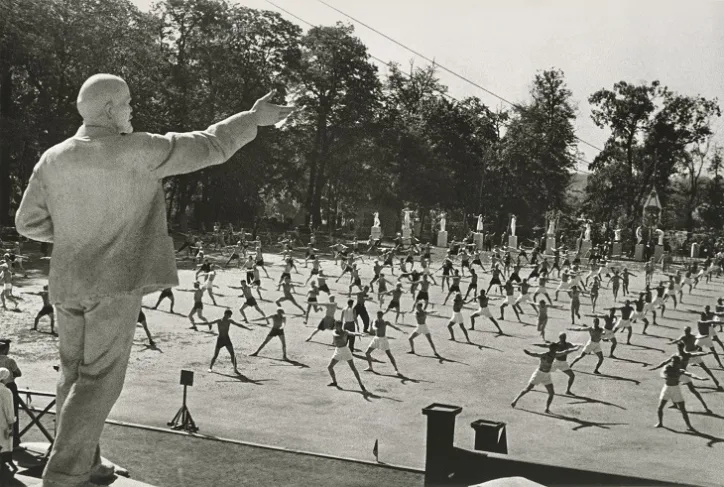
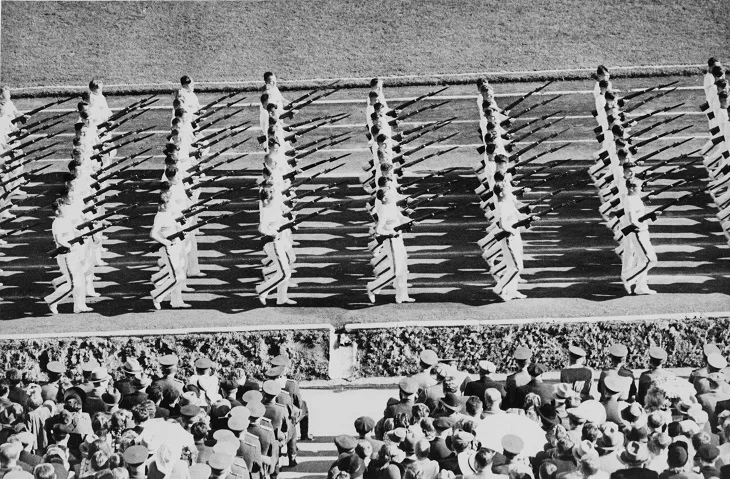
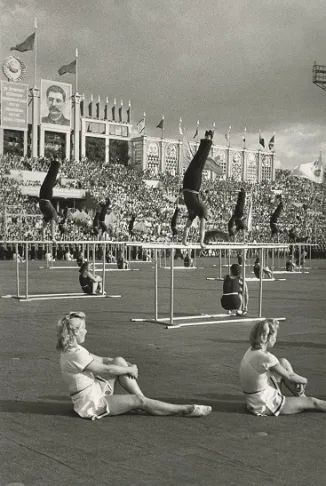
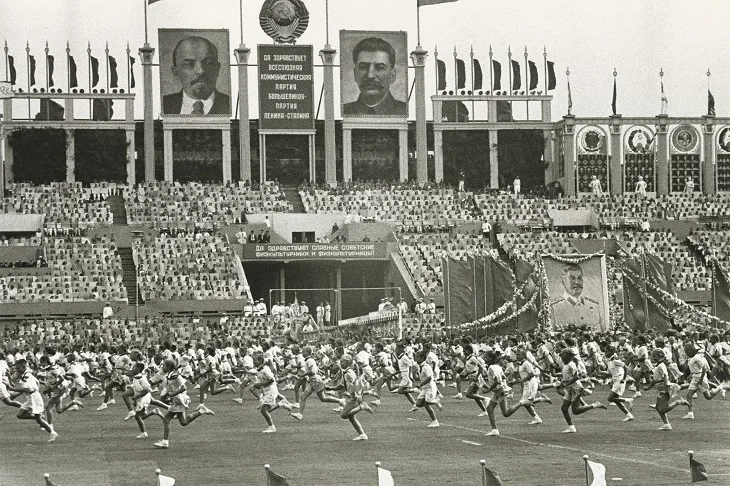
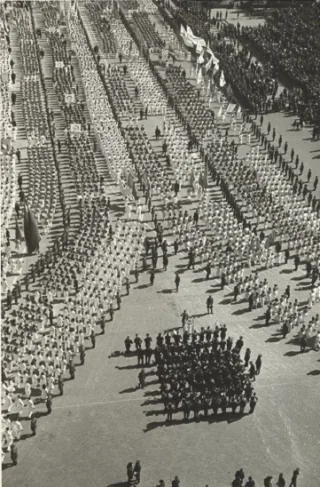
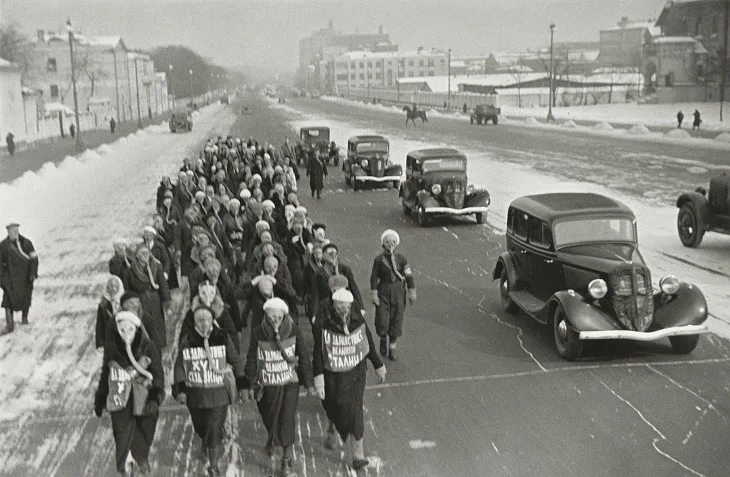
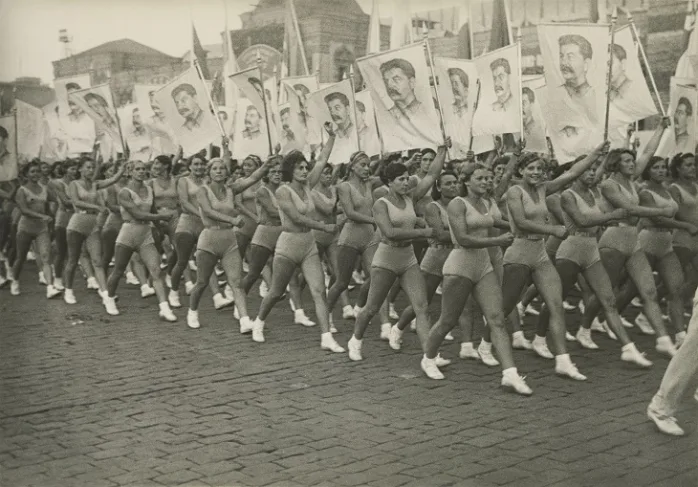
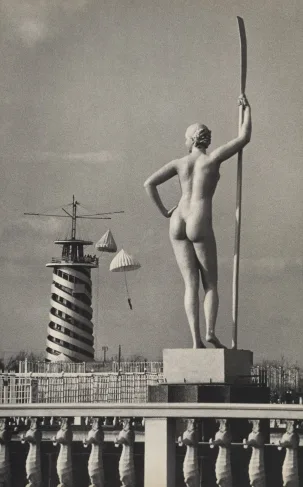
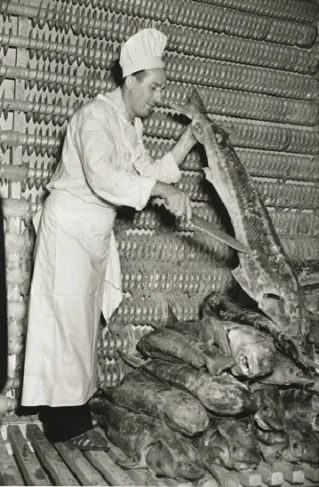
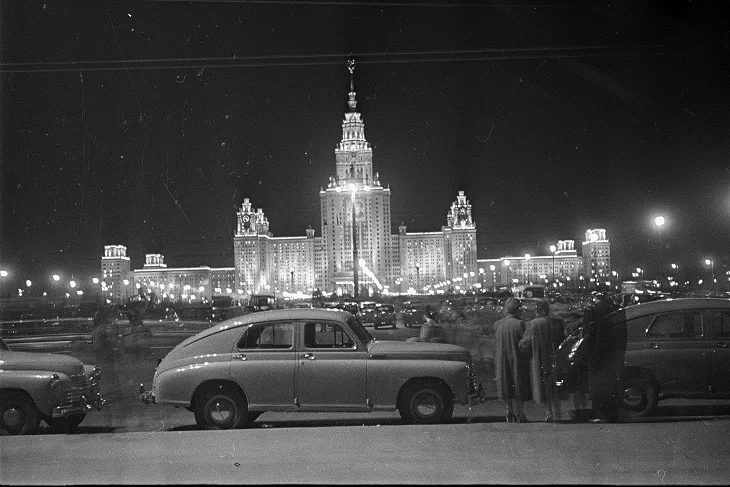
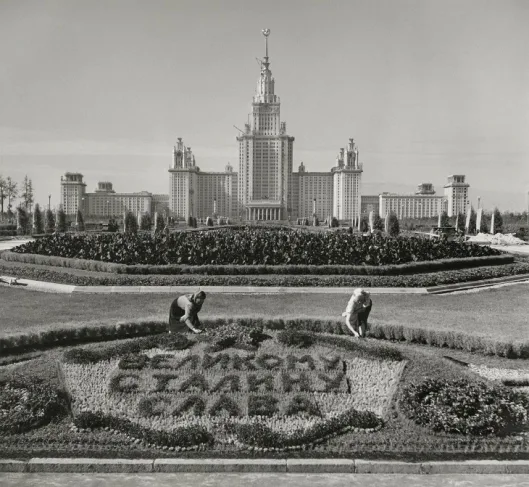
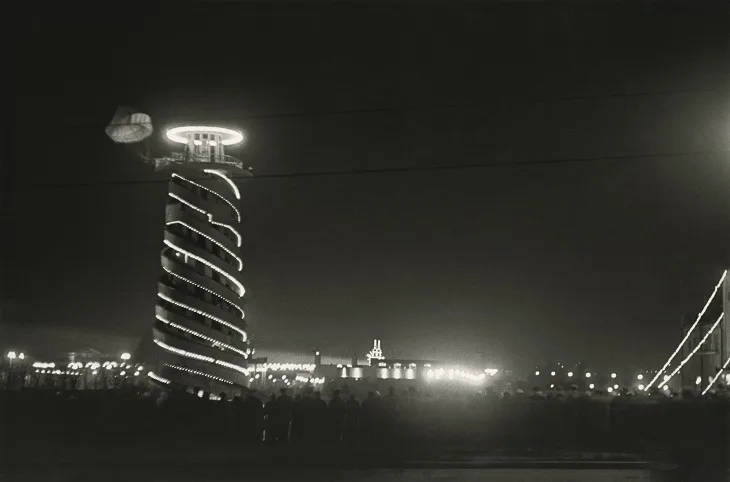
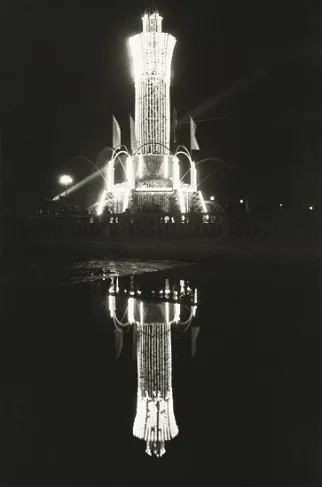
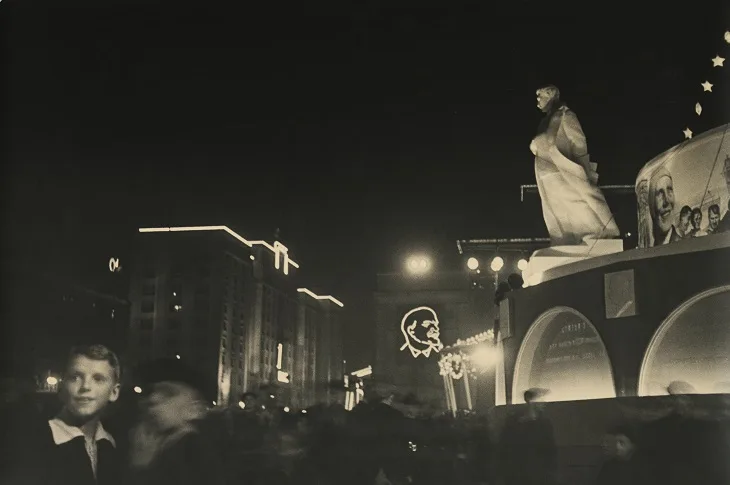
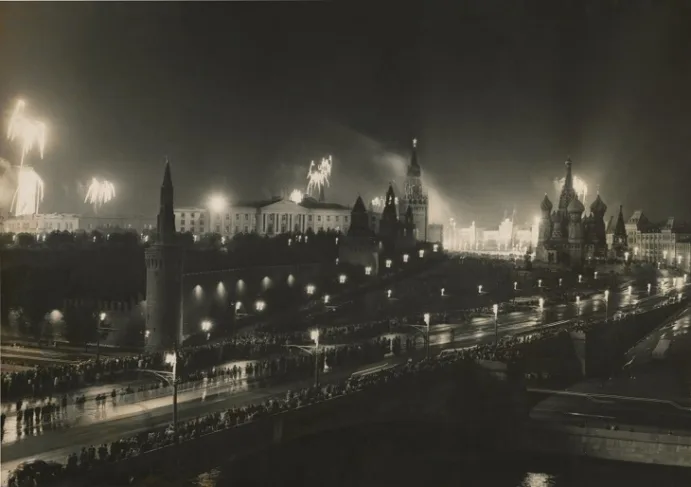
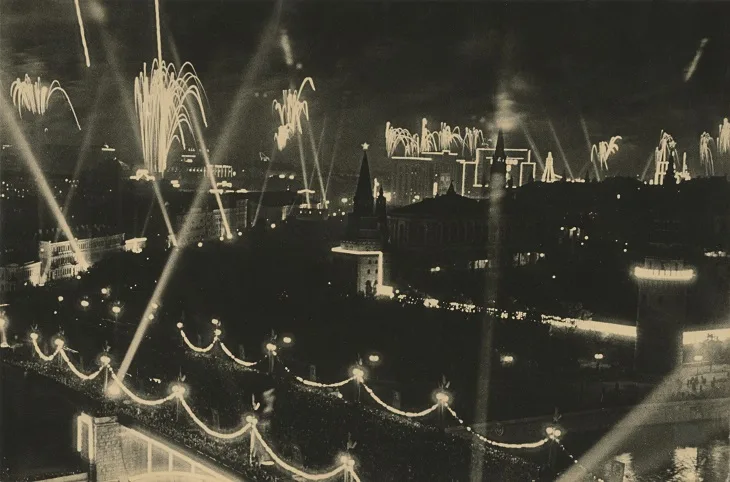
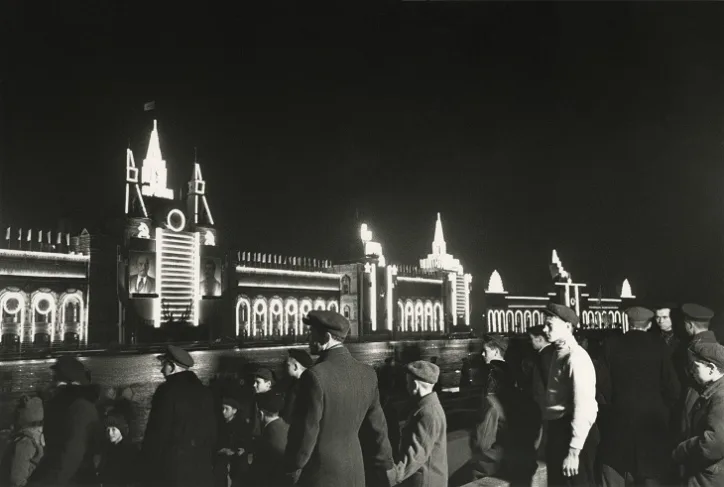
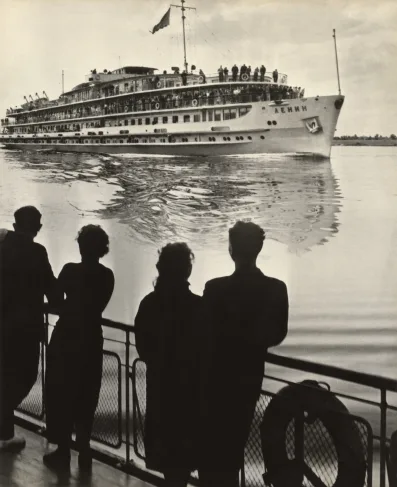
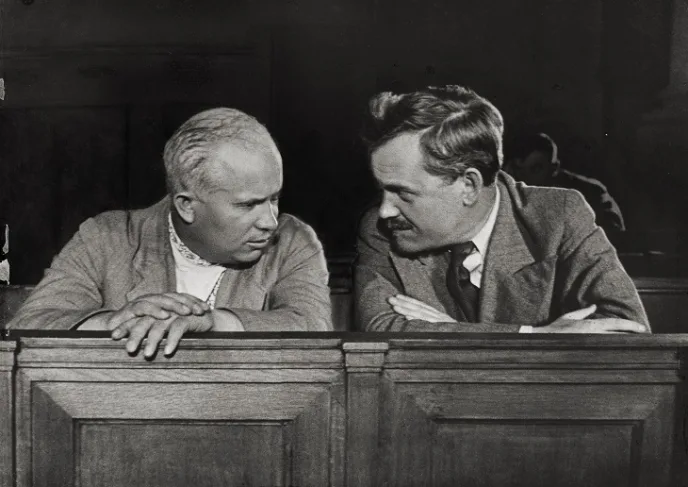
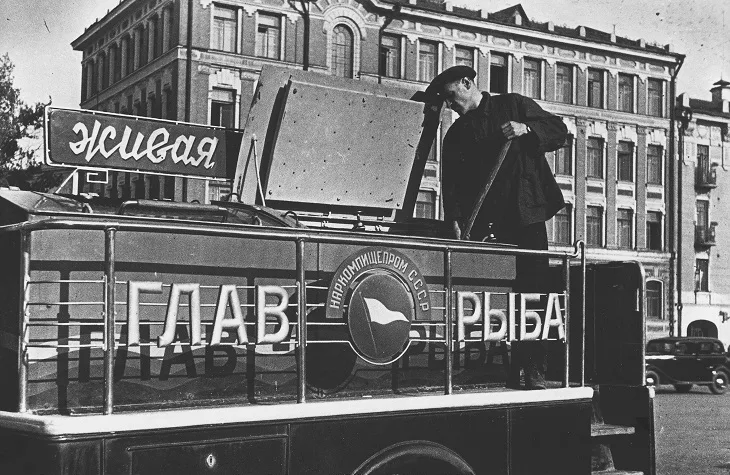
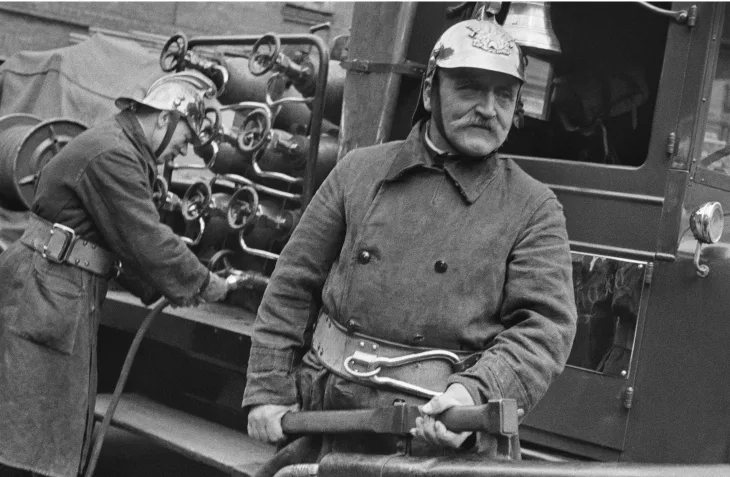
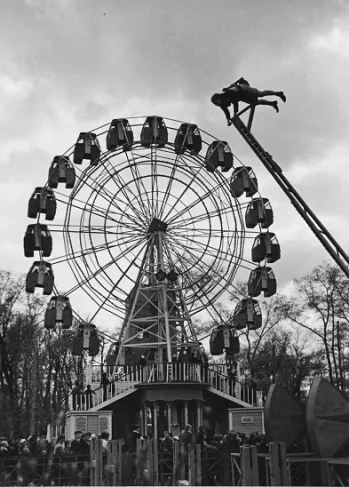
Emmanuil Evzerikhin. Rodina Cinema at the Semyonovskaya metro station Moscow, second half of the 1940s. Gelatin silver print from original negative. Collection of the Multimedia Art Museum, Moscow.
More information about the exhibition
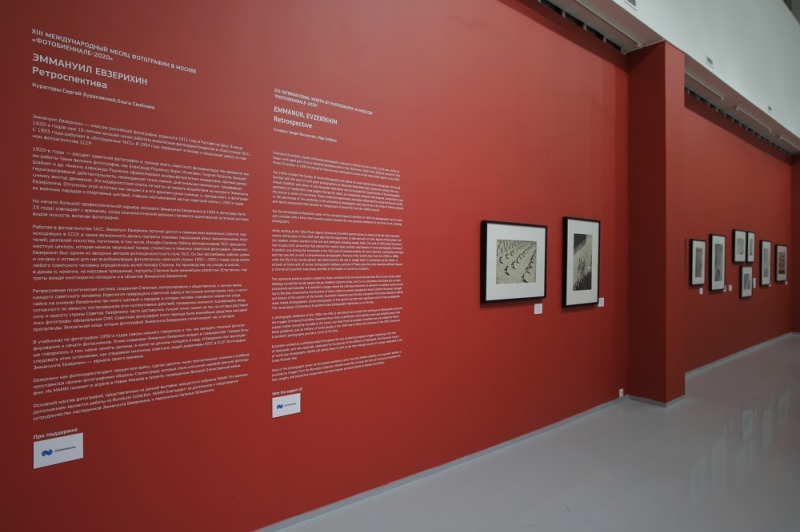
Emmanuil Evzerikhin
Retrospective
Emmanuil Evzerikhin, classic of Russian photography, was born in Rostov-on-Don in 1911. In the late 1920s he began work aged just 15 as a freelance photojournalist in the TASS Press-Cliché. From 1933 he worked for TASS Photo Chronicles. In 1934 he moved to Moscow and continued his career at the main photo agency of the USSR.
The 1920s marked the heyday of Soviet photography and, above all, avant-garde Soviet photography. We are all familiar with the work of such great photographers as Alexander Rodchenko, Boris Ignatovich, Georgy Petrusov, Arkady Shaikhet, and others.
It was Alexander Rodchenko who formulated the fundamentals of the photographic aesthetics of modernism: wide angles that glorify reality, an unexpected viewpoint and diagonal composition to give the picture a vector of movement. These modernist experiments inevitably influenced the young Emmanuil Evzerikhin. We see echoes of this aesthetics in his architectural photography, and most of all in the shots of military parades and sports processions that became an integral part of Soviet life from the 1930s onwards.
But the remarkable professional career of the young Emmanuil Evzerikhin (in 1934 the photographer was 23 years old) coincides with a time when socialist realism became the only possible aesthetics for all forms of art, including photography.
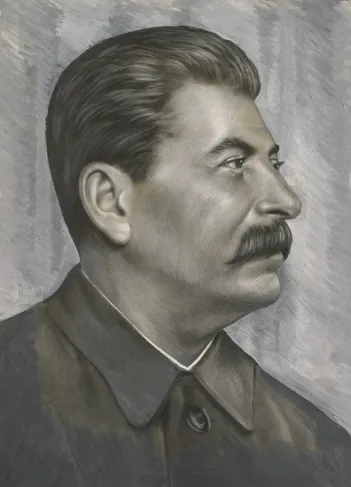
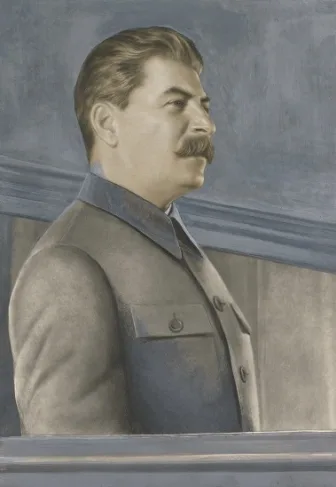
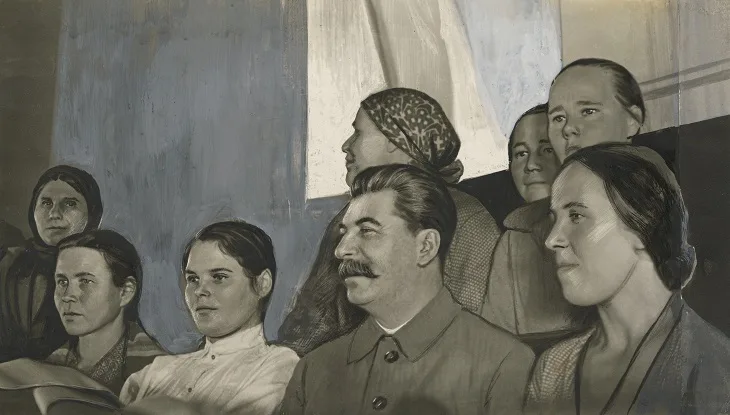
While working at the TASS Photo Agency Emmanuil Evzerikhin gained access to shoots of all the most important events taking place in the USSR, and also had the opportunity to take portraits of iconic figures of that period: military leaders, writers, workers in the arts and politicians including Joseph Stalin.
The work of TASS photo chroniclers had to pass strict censorship that altered the creative style, stylistics and themes of Soviet photography.
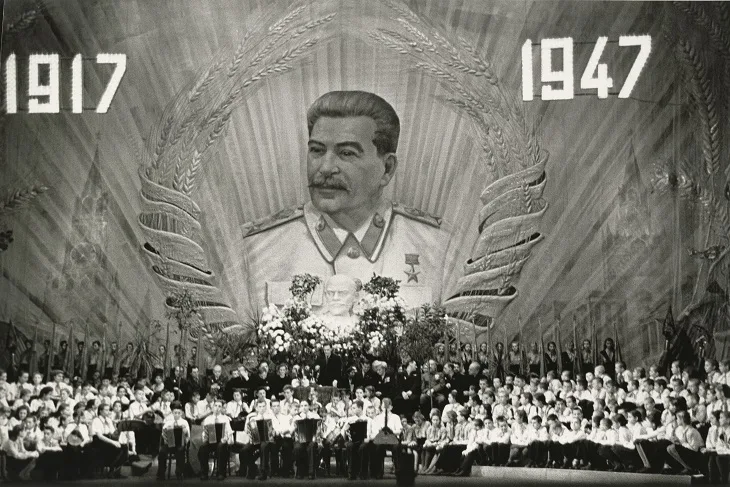
Emmanuil Evzerikhin was among the luminaries in the TASS pool of photojournalists. He was in demand, working day and night, and has now left us with a comprehensive photographic chronicle of the Soviet Union from the 1930s to 1950s, when the life of any Soviet person was determined by the will of Joseph Stalin. In production, on the streets, in schools, at home and, of course, during public holidays, portraits of Stalin were the most essential attribute. Naturally Emmanuil Evzerikhin took photo portraits of the leader on numerous occasions.
The repressive political system created by Stalin controlled both the social and personal life of every Soviet citizen. Ideology turned the Soviet people into an obedient collective body, and it is no coincidence that there are so many processions and parades in Evzerikhin’s images where the individual becomes an element in a pattern woven according to the plan conceived by the directors of these collective actions designed to hourly confirm the power, strength and beauty of the country of the Soviets.
Evzerikhin frequently got the best viewpoints from those allotted to official mass media photographers. Soviet photography of this period was the most significant tool of mass propaganda. The visual power of Emmanuil Evzerikhin’s best photographs hypnotises us to this day.
In photography textbooks of the 1930s very little is said about how to learn the technique of photography and print the images. Emmanuil Evzerikhin mastered these skills to perfection. Considerably more was detailed about what subject matter should be included in the frame, and what must be avoided. Evzerikhin too was obliged to follow these guidelines, just as millions of Soviet people in the USSR had to follow the directives of the CPSU. Emmanuil Evzerikhin’s photographs provide a mirror of his time.
Evzerikhin worked as a photojournalist throughout the war, producing poignant images numbering in the tens of thousands, and was especially celebrated for his pictures of the defence of Stalingrad, which became classics of world war photography. MAMM will exhibit these in April at the New Manege as part of a project dedicated to the Great Patriotic War.
Most of the photographs shown at the present exhibition come from the MAMM collection. An important addition is provided by images from the Borodulin Collection. MAMM would like to thank the heirs of Emmanuil Evzerikhin for their lengthy and productive cooperation and also express personal thanks to Natalia Evzerikhina.
How it was
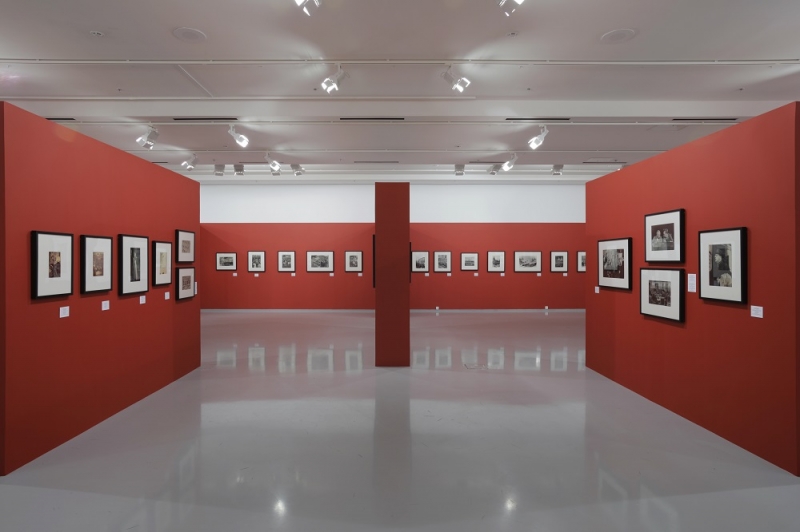
Where it was shown
Multimedia Art MuseumMoscowУл. Остоженка, д. 16
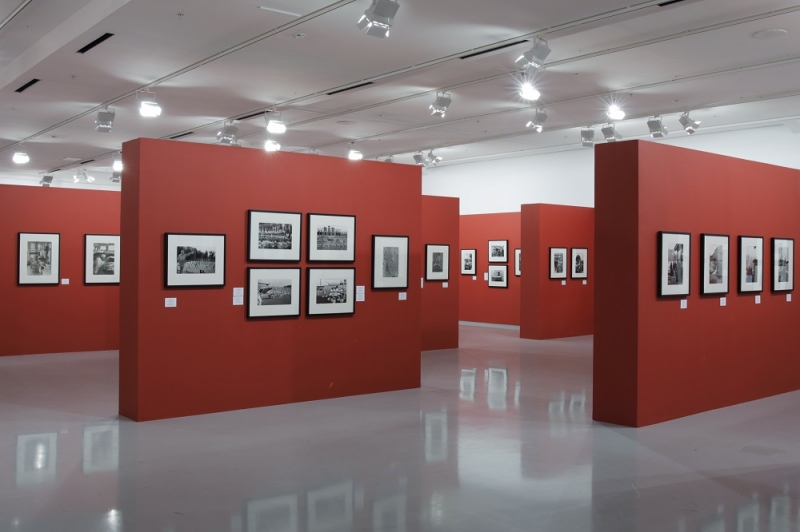
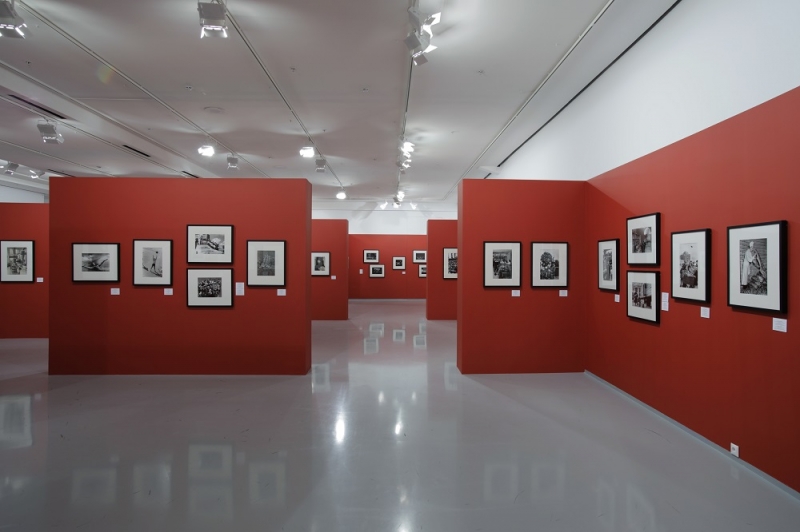
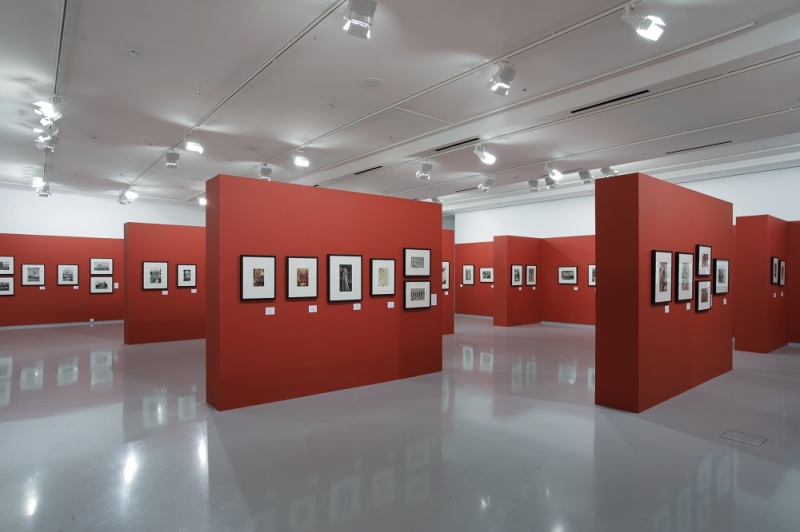
6 March — 29 July 2020
Corporate trustee of MAMM

General radio partner

Strategic media partner

Media partners