
—
Everyday life of a noble family in photographs by Piotr Vedenisov. 1909-1914
с. Спасское-Лутовиново
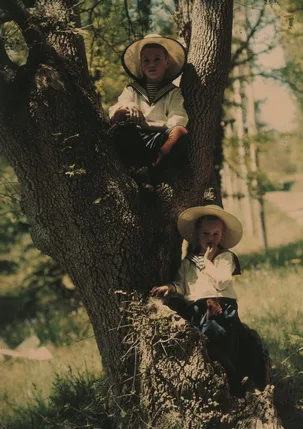
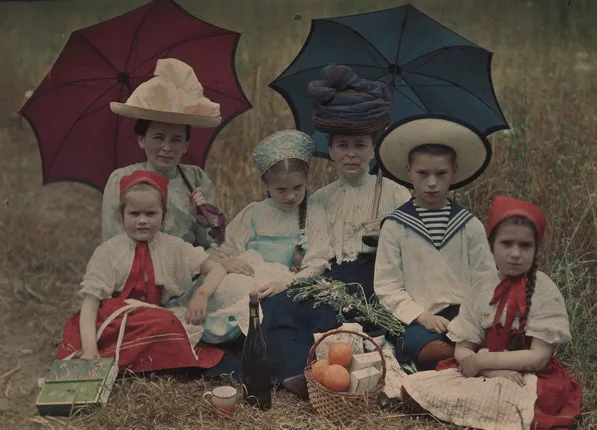
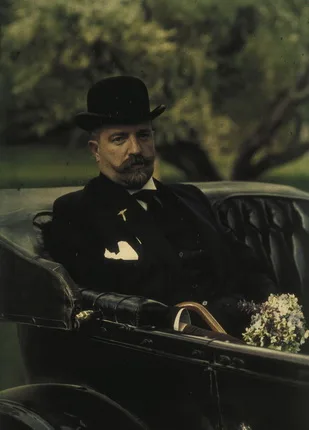
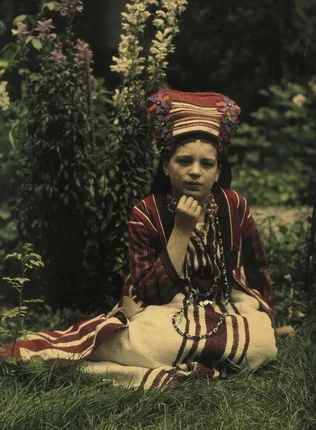
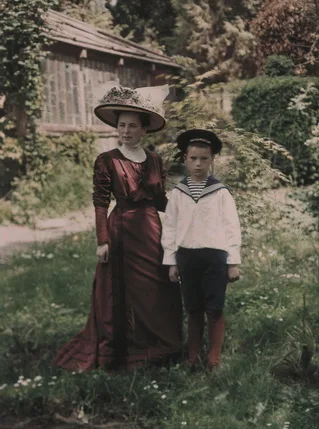
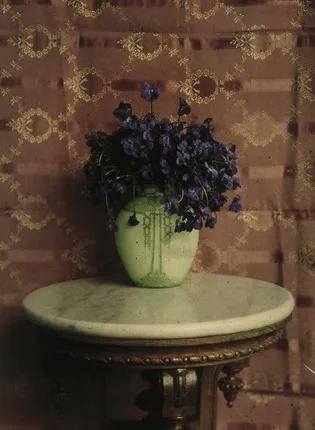
Piotr Vedenisov. Kolia and Tania Kozakov. Yalta, 1910. Digital print; original – autochrome. Collection of the MAMM
Press release
Piotr Vedenisov. Autochromes. 1909-1914
Piotr Ivanovich Vedenisov (1866-1937) ‒ an amateur photographer, of noble descent, from Yalta, who graduated from the Moscow Conservatory. Vedenisov set up various musical and literary societies, of which he was a member, and founded the Yalta Religious-Philosophical Society. He was also keenly interested in local history, and was well acquainted with such people as Anton Chekov, Maxim Gorky, Alexander Glazunov, Feodor Chaliapin, Cesar Cui, Alexander Spendiarov…
In the early 20th century Vedenisov-photographer masters a technical innovation of the time – the autochrome of the Lumière brothers (patented in 1903). This was a technique of creating works in color, based on three stages of consecutive shooting through color filters. It was further developed some time later – the Lumière brothers succeeded in placing all the filters on a single plate. Now the three-colored network was formed by potato starch grains, consisting of red, yellow and blue, which, after the application of the second layer, produced orange, violet and green. The viewer, looking at the plate against a source of light, could see the granules of the color that corresponded with that of the depicted object. In 1907 the Lumière glass plates began to be industrially manufactured (up to six thousand daily), and exported all over the world.
Piotr Vedenisov chooses his models among the members of his family and his friends-musicians. Other subjects include everyday life and travelling, feasts, pets, interiors and landscapes. The scenes take place in Yalta or in the Simbirsk Government, where the Kozakov family, the photographer’s relations, resided. All the shots remain within the borders of solid amateur photography, and the author uses them as illustrations for his lectures.
The majority of Piotr Vedenisov’s autochromes is kept in the Alupka Museum-Reserve. The “Moscow House of Photography” managed to acquire some 150 unique colored glass plates. Each of these images exists in only one copy – it is a slide on glass, without any printed paper impressions. Autochrome, unlike snapshots, demanded prolonged exposure (and, as a result, a comfortable posture), which was necessary because of the opaque starch network.
Autochrome photography presupposes staged shots, with a carefully structured and well thought-out composition, as well as a color scale taken into consideration beforehand. Vedenisov’s autochromes are united through their personages – members of a single large family, and are shot over a relatively short period of time, roughly from 1909 to 1914. Among the models of the photographer we may note his wife Vera Nikolayevna, her mother Elena Frantsevna Bazileva, the Kozakovs, who were friends of the family: Andrei Aleksandrovich, Sofia Nikolayevna and their five children Vera, Natasha, Kolia, Lisa and Tanya. The Vedenisovs and the Kozakovs enjoyed picnics, horse rides and automobile drives, masquerades and feasts, often with the goal of educating the young. For example, the fancy dress would often be inspired by the national style of the people inhabiting the Russian Empire; while a Christmas tree would be decorated with the flags of various countries. It appears that these years are the last joyful moments in the life of the family, the Belle Epoque, the time, when “there was yet no war with Germany”, and when all the tragedies of the 20th centuries – wars and revolutions – were still ahead.
Where it was shown
Государственный мемориальный и природный музей-заповедник И.С. Тургенева «Спасское-Лутовиново»с. Спасское-Лутовиново303002, Орловская обл., Мценский р-н, с. Спасское-Лутовиново, ул. Музейная, д. 3
1—23 July 2023