—
Early Colour. Russian Empire. 1890s – 1910s. New Acquisitions
Moscow
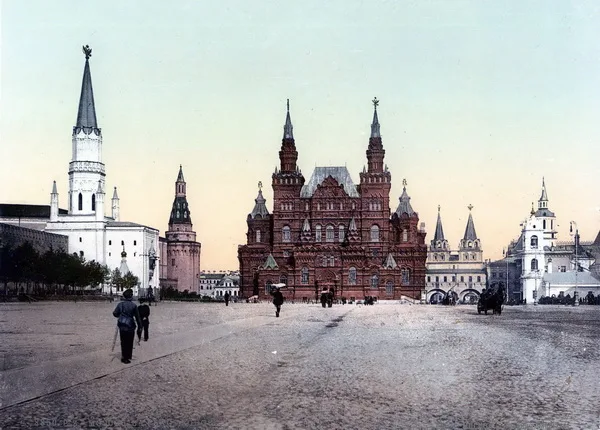
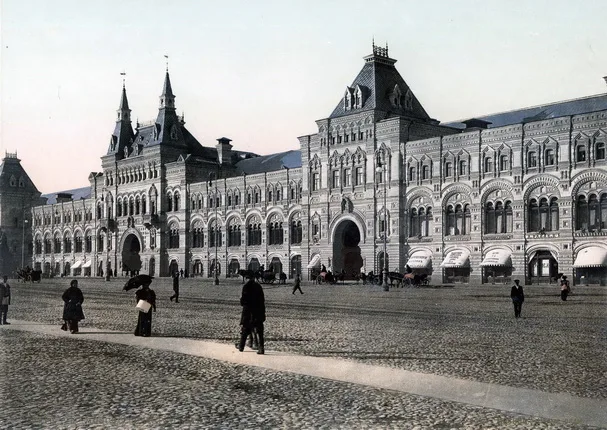
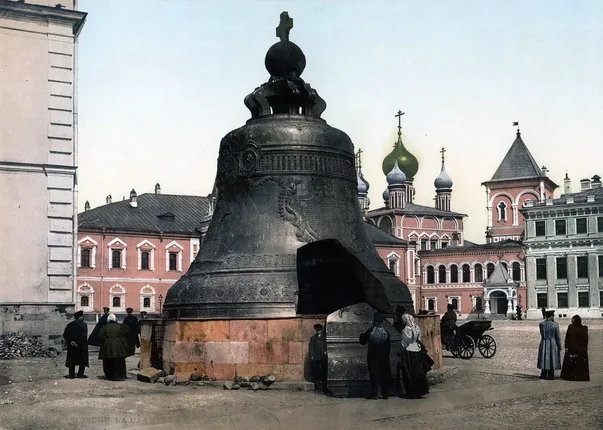
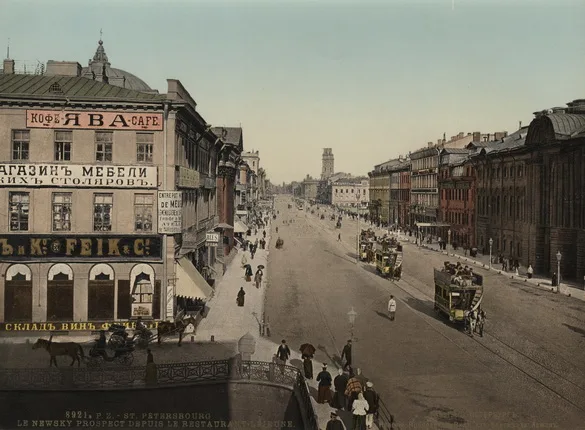
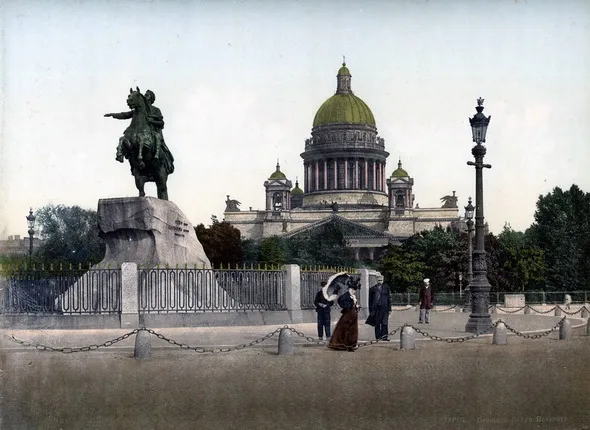
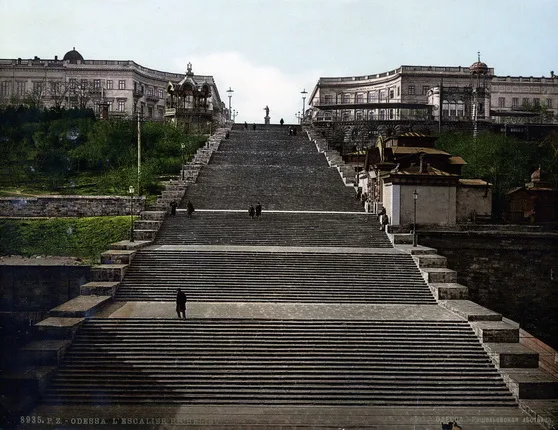
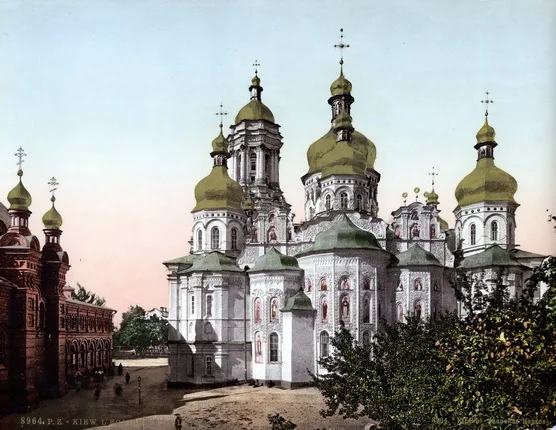
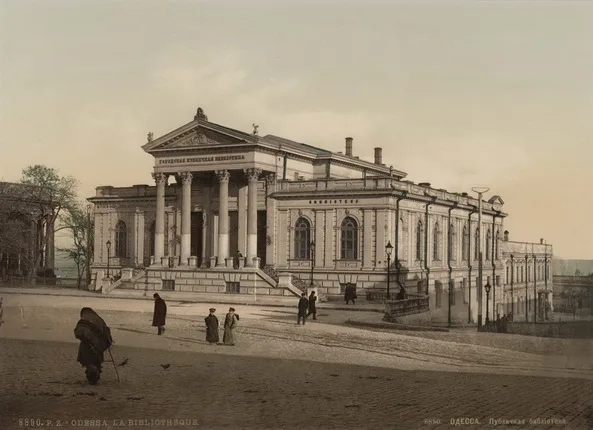
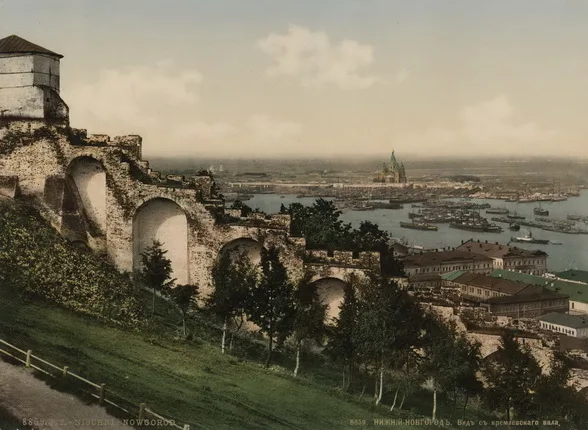
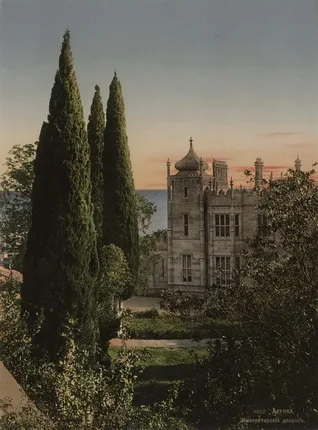
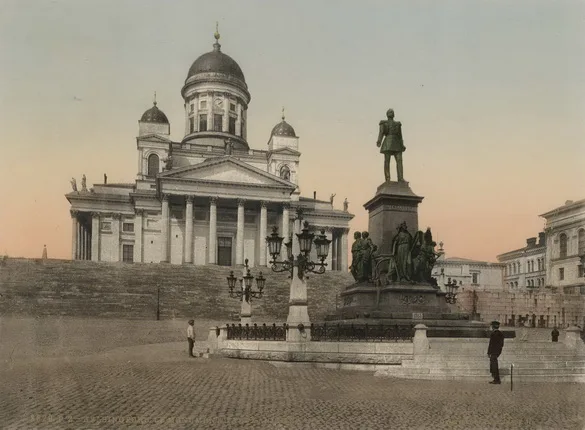
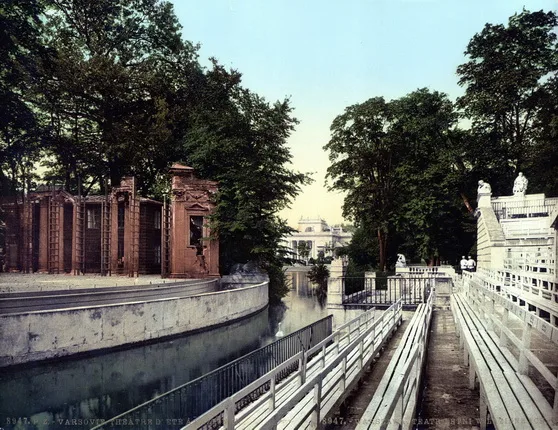
Unknown photographer. Moscow. Red Square. 1900-1910s. Photochrom. MAMM/MDF collection
Curators: Anna Zaitseva, Igor Volkov
Early Colour. Russian Empire. 1890s – 1910s. New Acquisitions
‘Early Colour. Russian Empire...’ continues the series of large-scale MAMM projects devoted to early colour photography, some of which have already been exhibited at the Manege Central Exhibition Hall in Moscow (2008), at the Photography Museum in Amsterdam (2013) and Photographers’ Gallery in London (2014). The current exhibition presents new acquisitions in the MAMM collection — pictures produced using the ‘photochrome’ technique, one of the earliest means to create a coloured image. At the same time the exhibition continues the long-term project, ‘History of Russia in Photography’, that MAMM has been developing since 1997.
The desire to master colour dates from the very earliest stages of photography. Initially photographs were hand-tinted, but specialists were already conducting endless experiments with more complex and technological methods of colour reproduction. Hans Jakob Schmid (1856-1924) made a veritable breakthrough in this respect. Working for the Swiss firm Orell Füssli, he invented the ‘photochrome’ in the 1880s. This technique made way for entirely new possibilities in the mass manufacture and distribution of colour prints, and enabled commercial production. Before long the proprietors of Orell Füssliset up a subsidiary company, Photochrom Zürich, specifically to print photochromes. Their products bore the gold initials ‘P.Z’. This trademark can be seen on the majority of prints recently acquired by the MAMM collection and showcased in the exhibition.
A catalogue from the Detroit Photographic Company, who acquired a patent for the technology in the 1890s, describes the merits of the photochrome as follows: ‘This is the only successful means yet known of producing a photograph in the colours of nature directly and without the aid of hand colour work. The results combine the truthfulness of a photograph with the colour and richness of an oil painting or the delicate tinting of the most exquisite watercolour. The colours are absolutely permanent and attain the virility and strength of nature so often lacking in hand coloured work. The prices are no more than those of ordinary photographs. The inventors have spent thousands of dollars and years of study before reaching their present success.’
Photochromes are deceptively reminiscent of colour photographs, but magnification dispels this illusion: the visible pigment particles reveal a photomechanical method of printing the pictures, based on inks. The process for creating photochromes was laborious, requiring several lithographic stones (six to fifteen, on average) coated with a specific asphalt-based mixture and specially prepared, each for a different colour. Black-and-white negatives provided the basic material. The identity of the photographer was nearly always omitted, and we can only guess who took the shots that then became photochromes. As a graphic illustration of the technical process a rare preserved pair of images features in the exhibition, with the black-and-white original and the photochrome version. The picture is entitled ‘View of the Moscow Kremlin Towers from Vasilievsky Spusk [St. Basil’s Descent]’ by Pyotr Petrovich Pavlov (1860-c.1925), the famous photographer who kept a studio on Myasnitskaya Street and consistently recorded historical events and architectural views of Moscow from 1898 onwards.
Photochromes were in great demand from ordinary customers and proved a focus for amateur collection. As cards, striking large-format panoramas or average-sized prints on thin paper, they were pasted into albums or framed as wall decoration for bourgeois drawing rooms.
Around eighty photochromes with views of various towns and provinces of the Russian Empire from the late 19th to early 20th centuries are shown in the exhibition, depicting St. Petersburg and environs, Moscow, Warsaw, Reval (now Tallinn), Kiev, Odessa, Helsingfors (now Helsinki), Gurzuf, Tiflis and Crimea.
Early attempts to introduce colour to photographic reproduction may appear naïve to the contemporary observer whose visual experience came from colour photography. But these images are endowed with the indisputable and inimitable charm of times past, and also provide a valuable documentary record of Russian history.
Where it was shown
Multimedia Art MuseumMoscowУл. Остоженка, д. 16
1 July — 14 September 2015
Генеральный партнер выставки

Official media partner

Strategic media partner

Media partners