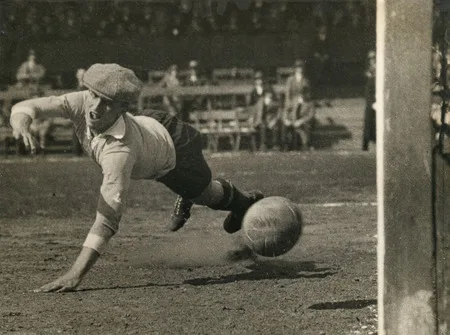
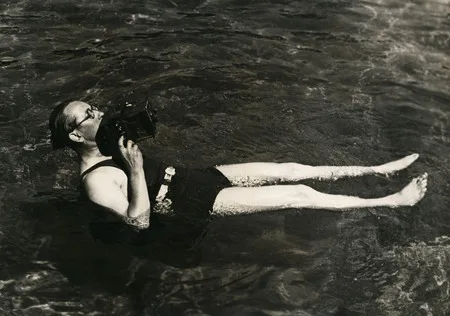
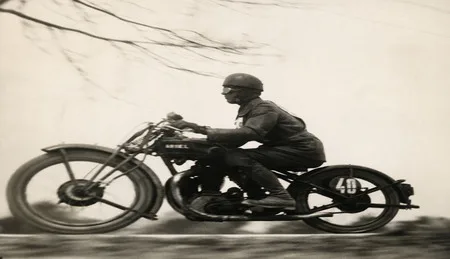
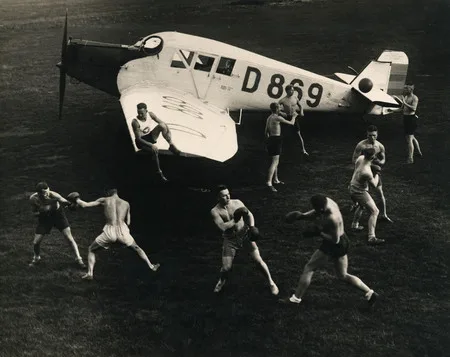
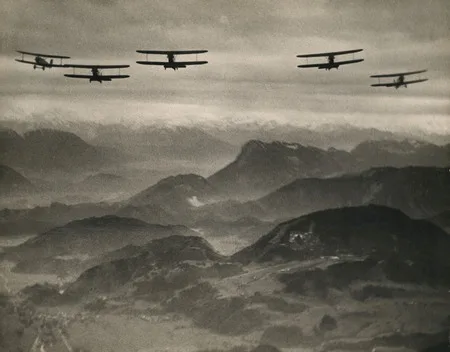
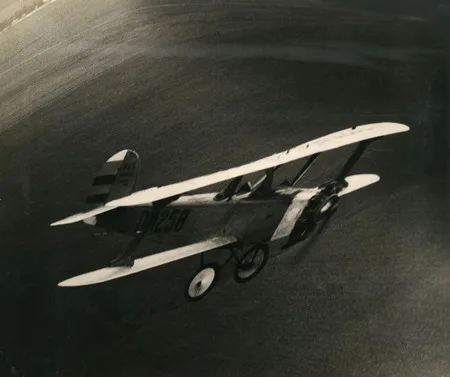
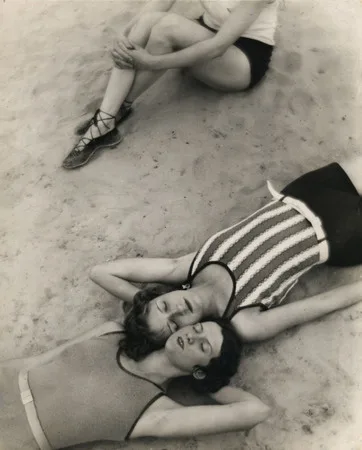
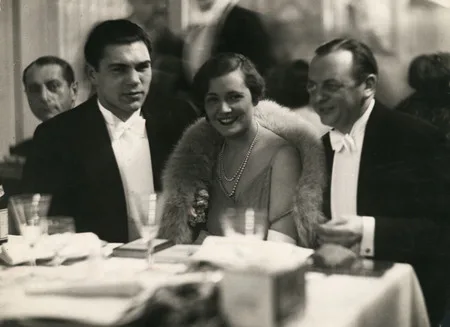
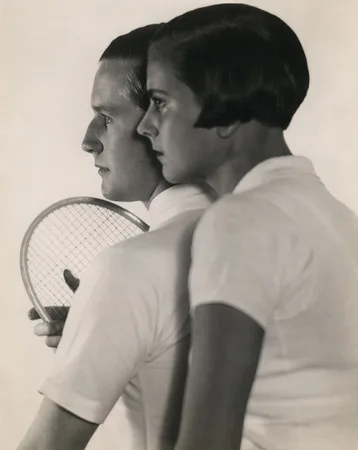
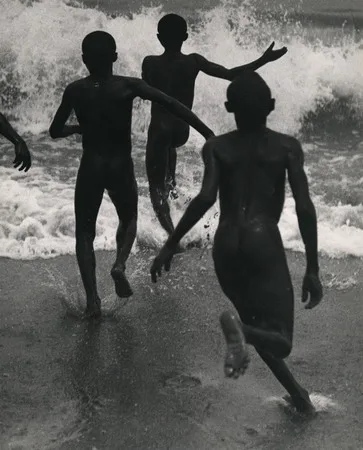
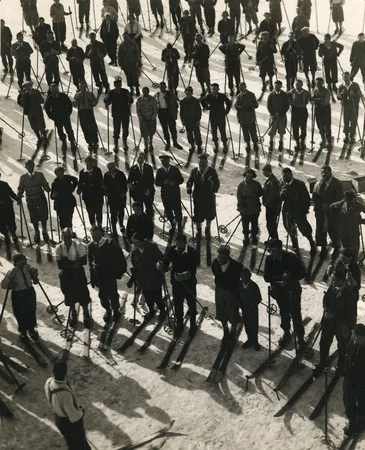
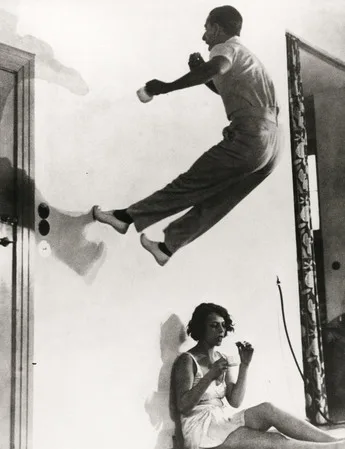
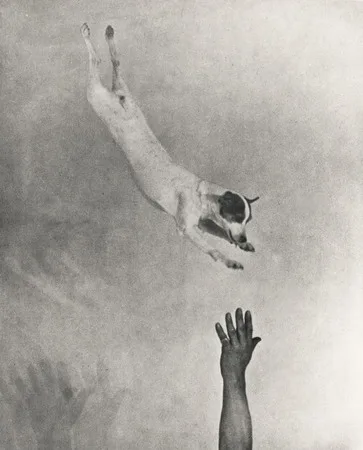
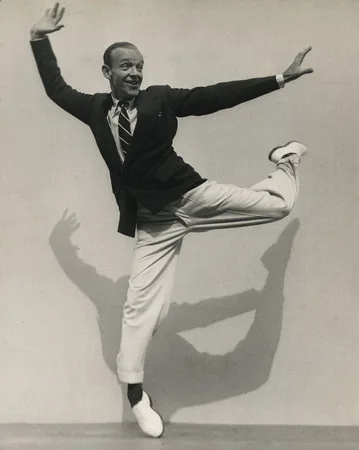
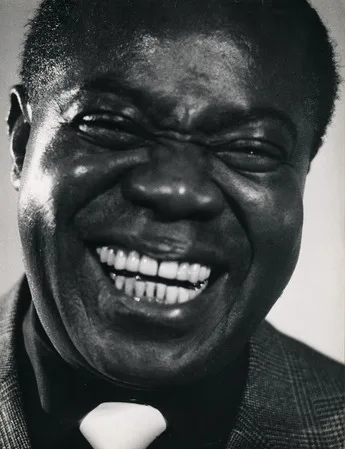
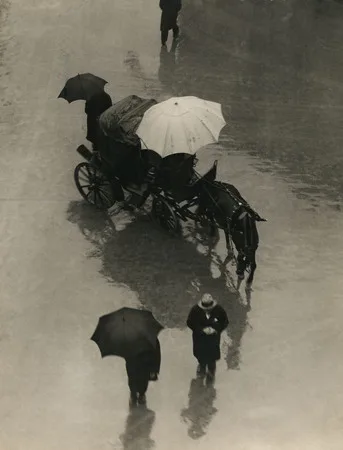
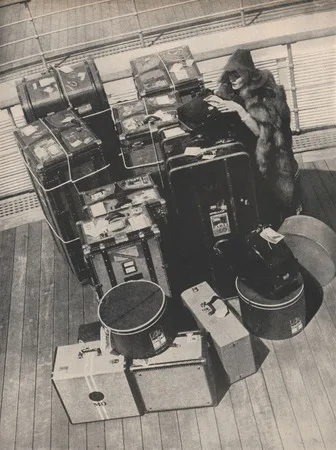
Martin Munkacsi. The goalkeeper is a split second too late. Budapest. In: Berliner Illustrirte Zeitung 42/1928 Vintage print. About 1928. Courtesy: ullstein bild
Curator: F.C.Gundlach
Famous today as an outstanding fashion photographer, Martin Munkacsi began his photographic career in Budapest as a reporter for daily and sports newspapers. Probably sport was the only reason Munkacsi became involved in journalism: a passionate fan of skating, tobogganing and soccer, he wrote about sports events as well as photographing them.
Munkacsi went on to work in every sphere of photography and was soon on a par with Rudolf Balogh, one of the most printed photographers at Pesti Naplo. Munkacsi reacted to being called a phenomenal landscape photographer, brilliant photo-reporter or remarkable portraitist with skepticism. A good photographer, he wrote, should be like the family doctor, capable of anything.
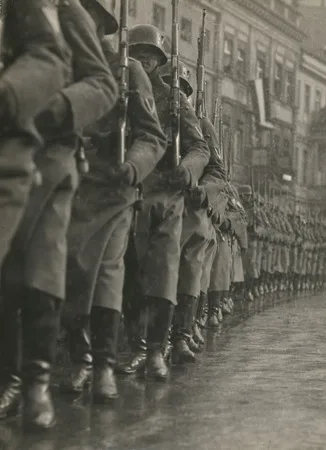
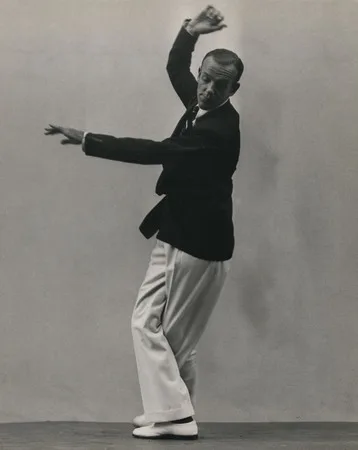
After leaving for Berlin in 1928, Munkacsi signed a contract with major publisher Ullstein and was dispatched on missions to Ankara, Jerusalem, Bethlehem, Cairo, Algeria and South America. He photographed the Prince of Wales, Kemal Pasha, Knut Hamsun, Selma Lagerlof, Leni Riefenstahl and Edvard Munch. Already he was well known as a photojournalist and his work was published all over Europe. In 1933 Munkacsi recorded the Nazi rally in Potsdam and his photographs were printed in a special issue of BIZ (the Berliner Illustrierte Zeitung, the most widely-circulated issue worldwide).
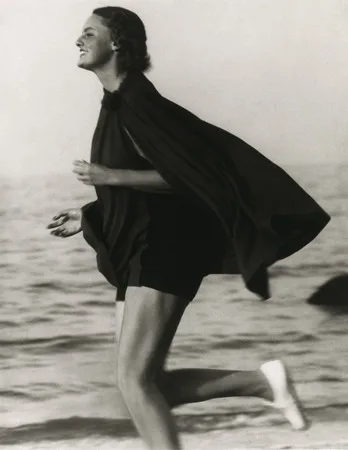
In 1934 Munkacsi arrived in New York, where Carmel Snow (Harper’s Bazaar) and Edward Steichen (Vogue) offered him work. Munkacsi’s professionalism (he used both negatives and plates), his aesthetic criteria (preferring plein air to the studio, even for nude shoots) and his origins (born in south-eastern Europe, he was unconstrained by the conditionality of fashion photography) brought him success in America and he became one of the most highly-paid photographers in the world of fashion magazines and glossy periodicals.
«Think While You Shoot!» was Munkacsi’s advice from the pages of Harper’s Bazaar in 1935 to photographers wishing to capture the new dynamism. Characteristics of his vision and recognisable style such as movement and diagonals demonstrated Munkacsi’s experience as a sports photographer, the ability to catch a thousandth of a second in the lens (hence The Decisive Moment in the work of Cartier-Bresson, who regarded Munkacsi as his teacher) and his mastery of framing. Munkacsi always used a medium-format camera (9×12), despised narrow-gauge film and favoured large-format prints (24×30).
After three divorces he lived the last few years of his life in straitened circumstances, even pawning his camera and art collection. The greatest photographer the world has ever seen, writer, raconteur, admirer of the female sex and connoisseur of art, Munkacsi died from a second heart attack, the result of a goal opportunity when he attended a soccer game in a New York stadium.
For the loan of the exhibited works, our thanks go to:
Joan Munkasci, Woodstock
John Harper Esten, New York
F. C. Gundlach Foundation, Hamburg
Thank:
Robert Lebeck and Csaba Morocz
Where it was shown
Central exhibition hall ManegeMoscowМанежная площадь, д. 1
17 October — 23 November 2008
Supported by