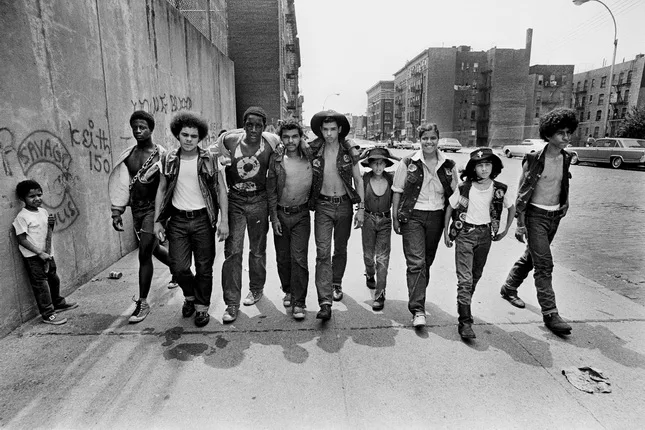
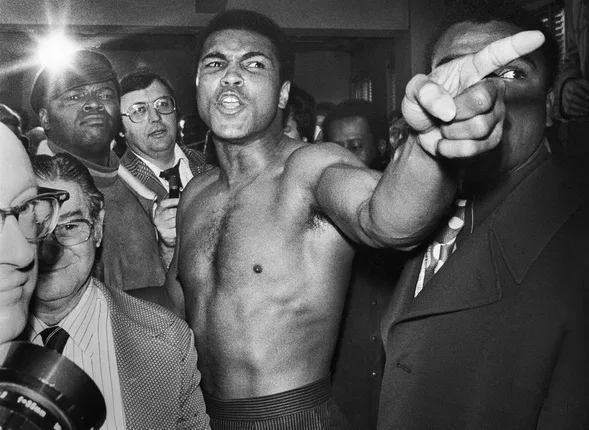
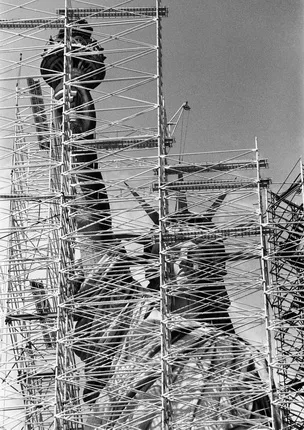
Jean-Pierre Laffont. Savage Skulls Group walking on sidewalk Bronx, New York City, NY - July 20, 1972. Savage Skulls members walk the sidewalk shoulder to shoulder in a scene right out of ‘West Side Story’. © Jean-Pierre Laffont / from the book “Photographer's Paradise. Turbulent America 1960-1990” (Glitterati)
AMERICA AS I LIVED IT
I was born French in Algeria, grew up in Morocco, and studied photography in Switzerland, before finding work as a photographer of movie stars in Paris. What I wanted to be, however, was a photojournalist and it was the United States that fascinated me. I arrived in New York in 1965 and for more than 3 decades, I travelled trough the country trying to capture the spirit of the times.
In the Sixties, New York was dirty and dangerous. The country was going through profound changes and it looked like everyone was in the streets protesting.
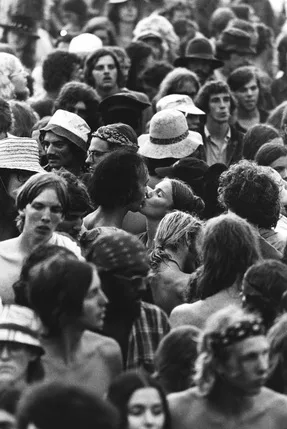
In the Seventies, the American dream seemed to be disintegrating. The American people no longer trusted their government. I covered the rise of the Black power movement and the Ku Klux Klan. During President Carter’s years, I did photo essays with the poor in his home state of Georgia. The American spirit was down. Still, the war in Vietnam had ended and through the hippie movement, the American youth found its voice and optimism.
In the Eighties, Americans were ready for a new beginning.
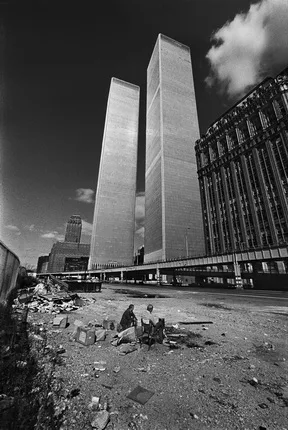
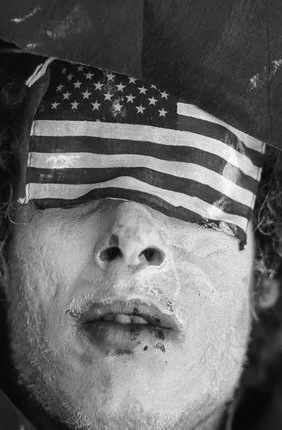
When I look back at the individual photographs I took during this quarter-century period, the images at first seem to depict a ball of confusion... riots, demonstrations, disintegration, collapse and conflict. Taken together, the images show the chaotic, often painful, birth of the country where we live in today: 21st-century America. They do what photographs do best: freeze decisive moments in time for future examination. These photographs form a personal and historical portrait of a country I have always viewed critically but affectionately, and to which I bear immense gratitude.
Jean-Pierre Laffont
JEAN-PIERRE LAFFONT. TURBULENT AMERICA 1960-1990
Jean-Pierre Laffont has always been a free spirit and a gifted, singular photographer, loyal to his own insatiable curiosity and uninterested in assignments. He sought to tell the stories of his era with a tender and compassionate gaze. Upon arrival in the United States in 1965, he quickly became a privileged witness to a nation embroiled in controversy and for three decades photographed its political, social and cultural mutations, observed the fate of its leaders and documented the tragic divisions of its civilization. This Turbulent America is above all his: brimming with spontaneity and humanity. In the intense canvas he paints for us, we find an abundance of the events that left their marks from the 60s to the 90s; the heroes and heroines; the captivating parade of social outcasts and fanatics, and the daily life of a people who live by the rhythm of their country’s failures and its moments of euphoria, harsh as well as liberating. Today, his photographic odysseys, filled with iconic images, bring history back to vibrant life in the form of a personal archive of events, which helped chisel the multiple facets of his adopted homeland.
Jonas Cuénin
JEAN-PIERRE LAFFONT. BIOGRAPHY
Born in Algeria in 1935, Jean-Pierre Laffont studied photography at Arts et Métiers in Vevey, Switzerland before immigrating to the United States in 1965 where he began his career as a photojournalist. After joining the Gamma agency, he started to cover political events and followed the riots against the war in Vietnam and the Civil Rights Movement. In 1973, alongside his wife Eliane, he co-founded Sygma Photo News, which rose to the top of the list of press agencies. During the next three decades, Jean-Pierre Laffont became a White House Correspondent, covered the Watergate story and carried out numerous political and social reportages throughout the United States as well as internationally in Eastern Europe, the USSR, China, Japan, India, Africa, and other developing countries. His images appeared in major international magazines such as Time, Newsweek, New York Times, Paris Match, Figaro Magazine, Stern and others. In 1979, he received first prize from the World Press for doing the first-ever photographic essay on the subject of child labor around the world. In 1996, he was honored with a retrospective of his work at Visa Pour L’Image and was named Chevalier de l’Ordre des Arts et des Lettres. Two books retrace his work: Foreign Correspondent, published in 2008 by C.D.P. and Photographer’s Paradise: Turbulent America 1960-1990, published in 2014 by Glitterati.
Where it was shown
Central exhibition hall ManegeMoscowМанежная площадь, д. 1
17 February — 17 March 2016
Проект представлен при участии Европейского Дома фотографии, Париж

Supported by


General media partner

General radio partners


Strategic media partners


Media partners