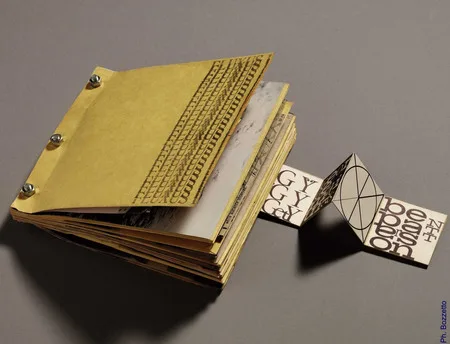
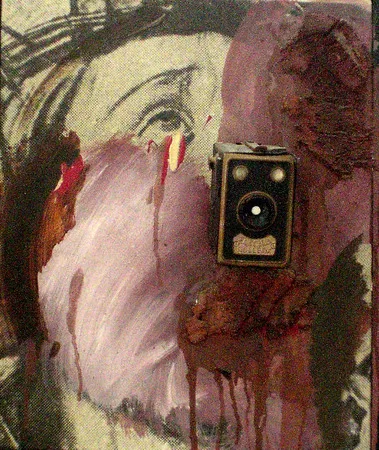
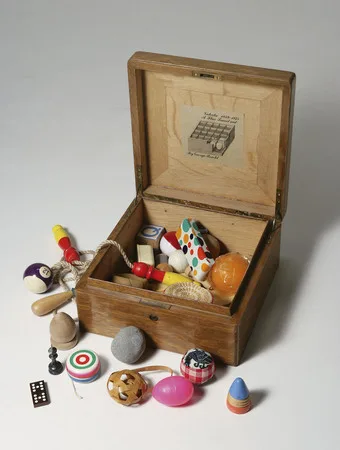
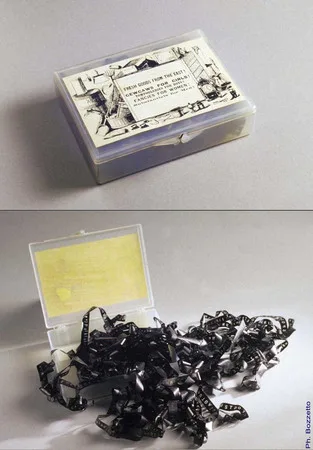
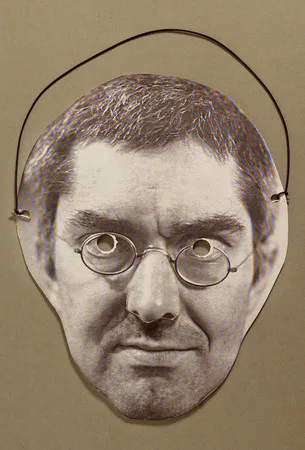
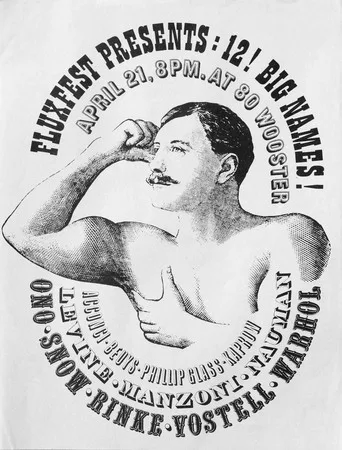
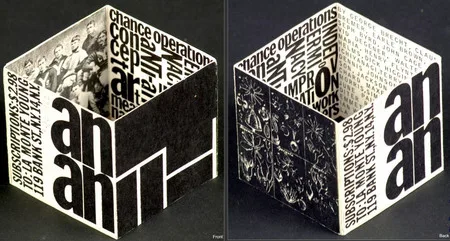
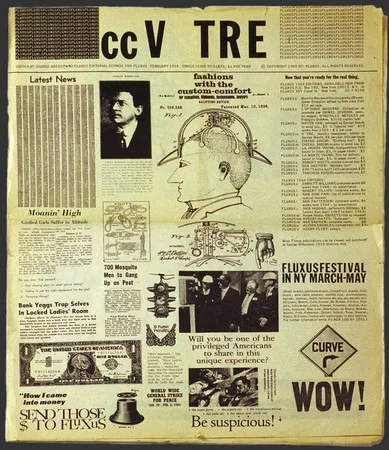
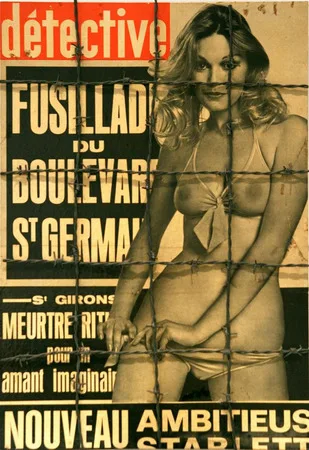
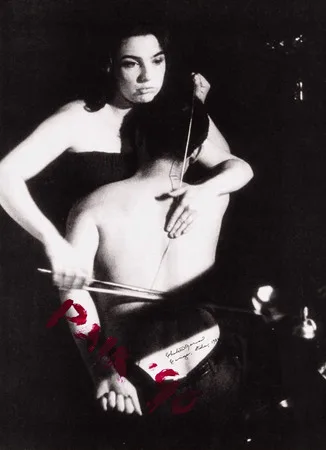
George Maciunas. Fluxus 1 (Book). 1964. Artist’s book, packaging designed, edited and produced by George Maciunas. Containing envelopes with works from Fluxus Editions, photographic documentations and documents of the Fluxus artists. Archivio Bonotto, Molvena, Italy
curator: Bernard Blistene
assistant curator: Nicolas Liucci-Goutnikov
commisar: Jacqueline Frydman
«Fluxus: Time Will Tell...» is the first exhibition devoted to the Fluxus movement held in Russia. Growing out of Dadaism, they became the forerunners of conceptual art. Although examples of Fluxus have never been exhibited in Russia before, artists that were born here lie close to the movement.
The project was essentially a desire to combine art and life — the same idea that inspired the LEF group. LEF wanted to replace paintings with posters, theatre with demonstrations, and sculpture with everyday objects. Fluxus, in turn, aimed to eliminate art by dissolving its canonical forms in the practice of ’intermedia’, by liberation from the object in favour of celebrating the body and ephemeral forces. Let us also recall seminal figures like Erik Satie, Marcel Duchamp and John Cage, who prompted the Fluxus artists to use materials from everyday life — ready-made articles, thereby denying the expression of their own ego.
Fluxus: Time Will Tell
The ’Fluxus: Time Will Tell...’ is the first exhibition devoted to the Fluxus movement held in Russia. The movement is still largely unknown worldwide. This is hardly surprising, since Fluxus artists always endeavoured to bypass traditional art institutions and deconstruct the basic principles of art.
Fluxus can be seen as a phenomenon, even a legal entity. Essentially it represents a community of artists and non-artists participating in collective activities, and a specific attitude towards art in general. This organisation led by Lithuanian-born artist and theoretician George Maciunas spread across the US, Germany, France and Japan and had its own post box, catalogue and price list on demand. Moreover, Fluxus had its own credo that was centred, naturally, on freedom of action.
Although examples of Fluxus have never been exhibited in Russia before, Russia and the avant-garde artists that were born here lie close to the heart of the Fluxus movement. The project was essentially a desire to combine art and life — the same idea that inspired the LEF group. This aspiration testifies to the way experience of the historical avant-garde was reappropriated in the early 1960s. LEF wanted to replace paintings with posters, theatre with demonstrations, and sculpture with everyday objects. Fluxus, in turn, aimed to eliminate art by dissolving its canonical forms in the practice of ’intermedia’, by partial liberation from the object in favour of celebrating the body and ephemeral forces. In other words, by freeing poetry from its birthplace — the text — and returning it to life. Emancipation from the logos for an exploration of new, essential and untrammelled forms of expression that hark back to zaum and Khlebnikov, with whom Fluxus shared the same love of buffoonery. Let us also recall seminal figures like Erik Satie, Marcel Duchamp and John Cage, who prompted the Fluxus artists to use materials from everyday life — ready-made articles of all kinds, thereby denying their professionalism and expression of their own ego.
In 2009 the exhibition ’Soudain l’ete Fluxus’ (’Suddenly, Summer Fluxus’) was devised and put on display at Le Passage de Retz art centre in Paris. This was not a retrospective: the exhibition was based on archive materials, many never before seen by the general public and primarily from the collection of Ben Vautier. The exhibition was conceived from discussions and meetings with Ben at his house high in the hills surrounding Nice. Ben Vautier had consented to a first-time showing of this remarkable collection of works and objects, often of an intimate nature, while he was still in Paris. The unique archive central to the exhibition is accompanied by items from private sources, including Luigi Bonotto’s Italian collection.
The ’Fluxus: Time Will Tell...’ exhibition benefited from the amicable and exceptional support of Ben and Annie Vautier. Bernard Blistene acted as curator. He was assisted by a team from the Passage de Retz art centre directed by Jacqueline Frydman, with the aid of Valerie Maffioletti and others.
Where it was shown
Multimedia Art MuseumMoscowУл. Остоженка, д. 16
12 October — 21 November 2010
Supported by