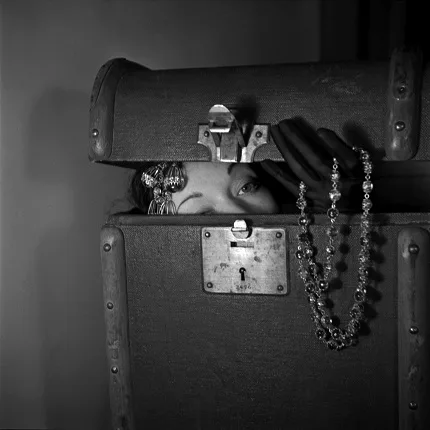
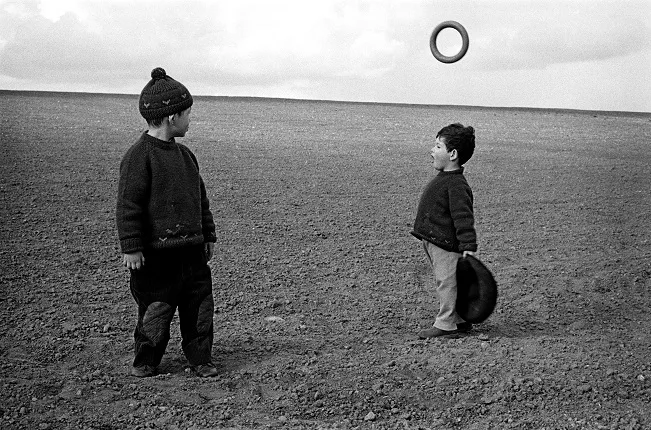
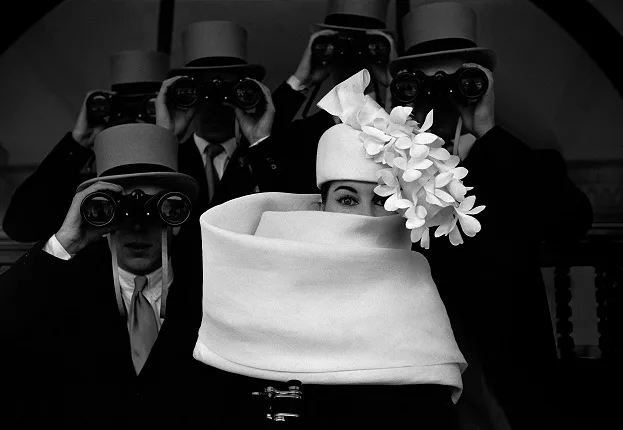
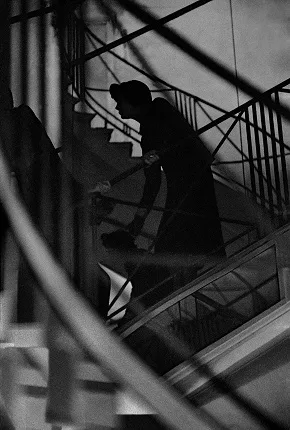
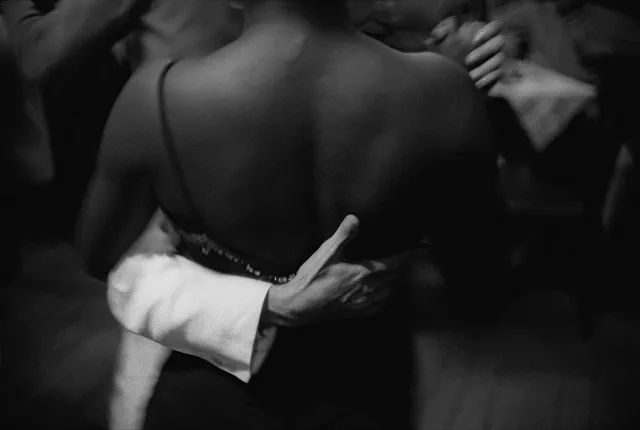
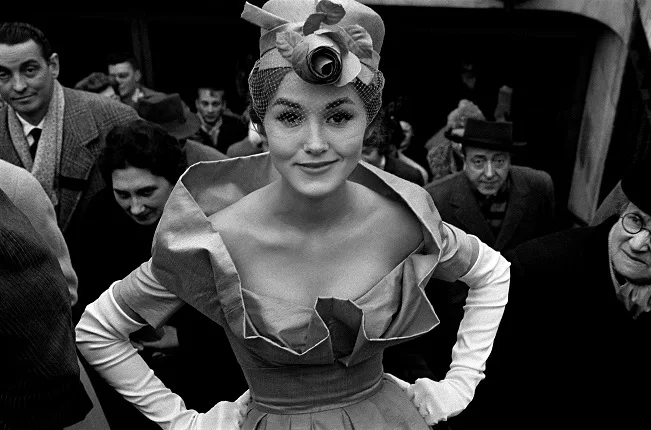
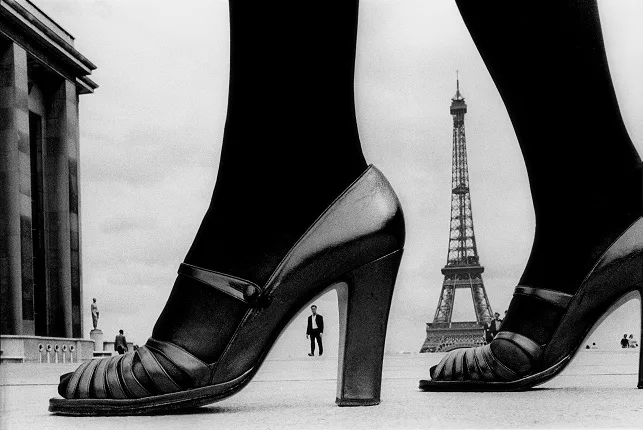
Frank Horvat. Fashion test with Mate. Milano, Italy, 1950. © Frank Horvat
Press release
Frank Horvat
The House with Fifteen Keys
5 June 2019 — 21 July 2019
Strategic partner of the museum: Mastercard
With the support of: Embassy of France in the Russian Federation, the French Institute
As part of the XI Moscow International Biennale ‘Fashion and Style in Photography-2019’ the Multimedia Art Museum, Moscow presents an exhibition by classic of world photography, revolutionary and cosmopolitan Frank Horvat.
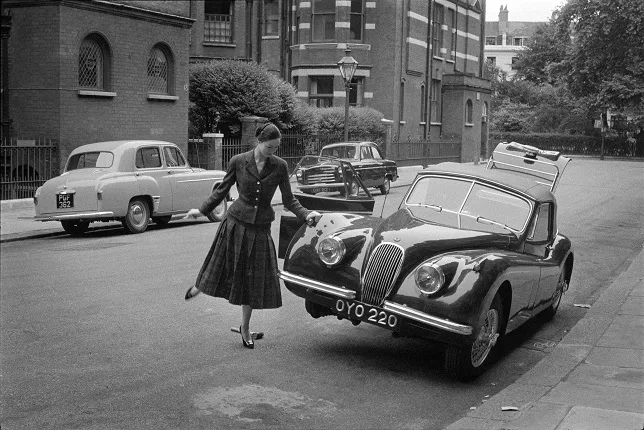
Frank Horvat was among the first to combine fashion and street photography. He brought models from the photo studio to the street, renouncing complex theatrical make-up and cumbersome, unwieldy cameras in favour of the convenient lightweight Leica. This marked a revolution in fashion photography and greatly influenced development of this genre in the 20th century. In the 1970s Horvat was a pioneer in his extensive use of digital technology, enthusiastically demonstrating to both colleagues and public the opportunities digital technique could offer for the professional photographer.
The ‘House with Fifteen Keys’ retrospective showcases 200 photographs by the maestro, who this year celebrated his 91th birthday and also the 71st anniversary of his creative output.
Frank Horvat explains the title of the exhibition in a brief essay dedicated to the exhibition: ‘Why keys? I am at the age when one looks back and tries to make sense of it all. I had the luck to take photographs for almost 70 years, in a period when the world changed more than in any comparable time span. To live in 6 different countries and to travel to several more. To think, speak and write in 4 languages. To photograph many subjects, from different viewpoints and with different techniques. To have other interests beside photography, such as writing and olive growing.
My eclecticism had its drawbacks. Some questioned my sincerity. Some found that my photos were hard to recognize, «as if they were by 15 different authors». That is why I went through my work (or through what has been preserved of it), searching for a common denominator. I didn’t find one — but 15. Running (more or less) through all those years. I called them keys.’
Frank Horvat was born in what was then Italy, and is now Croatia. He became interested in photography while still at high school, trading his stamp collection for his first simple camera. According to the photographer, his friend persuaded him that the camera would bring success with the girls.
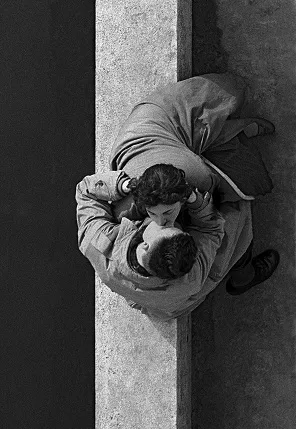
After the Second World War Horvat studied fine art at the Accademia di Brera in Milan, then worked as a designer for a Milan advertising firm. In the early 1950s he travelled extensively in France, India and England, taking photographs inspired by the traditions of Italian neo-realism and photojournalism by luminaries of the Magnum photo agency. A turning point in Frank Horvat’s career came in 1955, when Edward Steichen included one of the photographs from this period in the famous ‘The Family of Man’ exhibition at the Museum of Modern Art in New York.
At the invitation of the Black Star Publishing Company Frank Horvat visited London, where he created a whole series of reportages that subtly reveal peculiarities of the English way of life
where eccentricity unites with extreme conservatism. Horvat succeeded in visually emphasizing this contrast by discovering and exposing the grotesque and absurd in the most ordinary images and situations, giving them ambiguity and symbolism. Later Horvat used this technique during his Paris period.
In 1956 Horvat finally settled in Paris. After getting a job at the legendary Magnum agency he worked there for just three years and turned to fashion photography, making full use of all the techniques and skills acquired during his years as photo correspondent. Natural light and purity of line were combined in his work with staged mise en scène, which according to the author’s intention ‘feigned’ reportage shots.
Frank Horvat’s innovative style proved a great success. He collaborated with leading fashion periodicals including ‘Jardin des Modes’, ‘ELLE’ and ‘Harper’s Bazaar’. In the early 1960s Horvat became one of the most influential and highly paid young photographers, working in the sphere of fashion photography beside such celebrities as William Klein, Helmut Newton, Jeanloup Sieff, Terence Donovan and Bob Richardson.
Despite undisputed recognition, Frank Horvat was never restricted by a single genre. He resumed his cooperation with Magnum, produced a whole gallery of portraits capturing Federico Fellini, Marcello Mastroianni, Alberto Moravia, Agnès Varda and other movie stars, and also issued a book with digital photo illustrations to classic tales. He works hard, travelling and participating in exhibitions all over the world.
Over the years Frank Horvat has amassed his own collection of photographs, exchanged pictures with his colleagues and close friends — Marc Riboud, Jeanloup Sieff, Mario Giacomelli and others.
Where it was shown
Multimedia Art MuseumMoscowУл. Остоженка, д. 16
5 June — 28 July 2019
Supported by
Strategic partner of the museum

General radio partner

Specialist media partner

Strategic media partner

Media partners