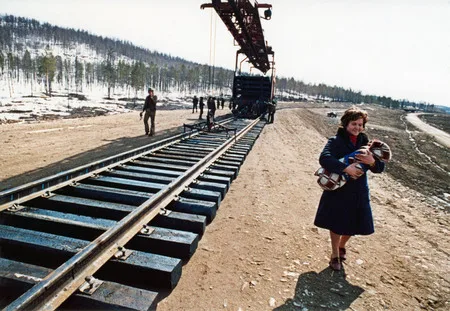
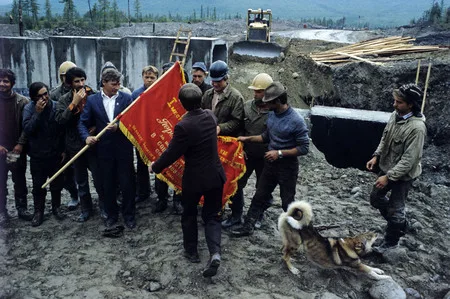
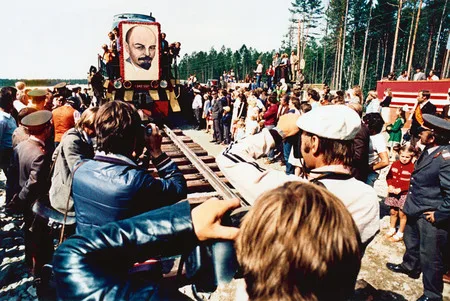
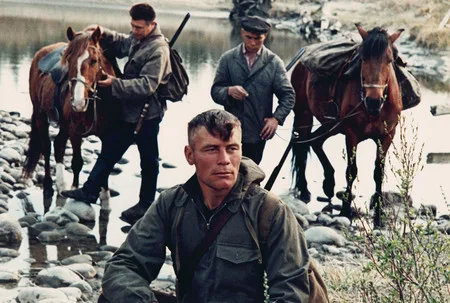
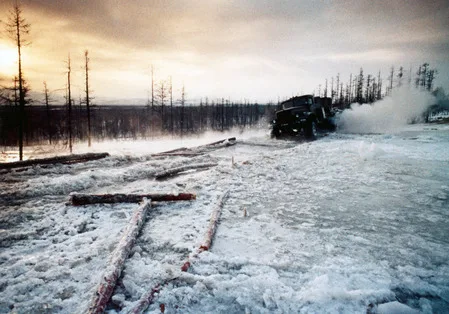
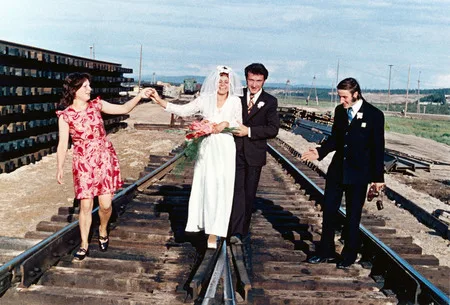
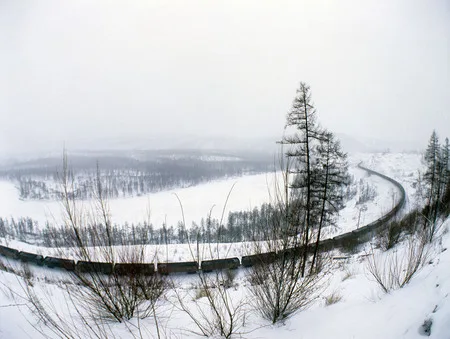
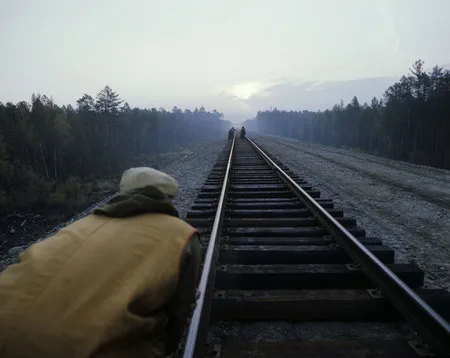

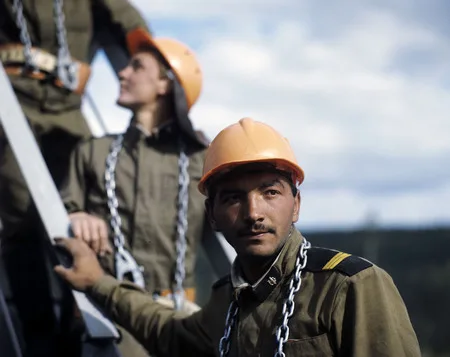
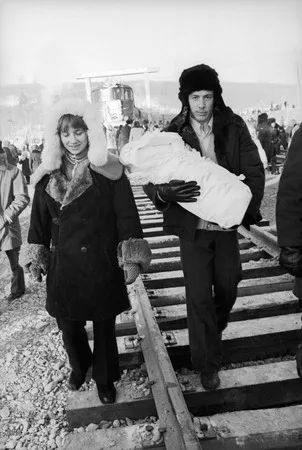
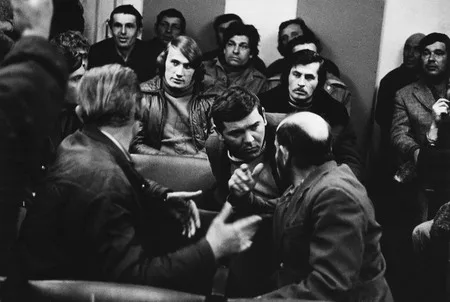
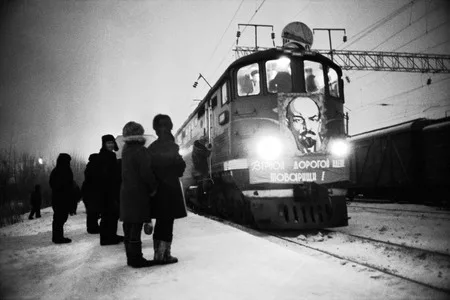
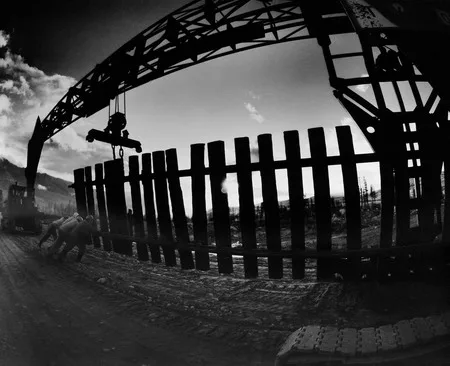

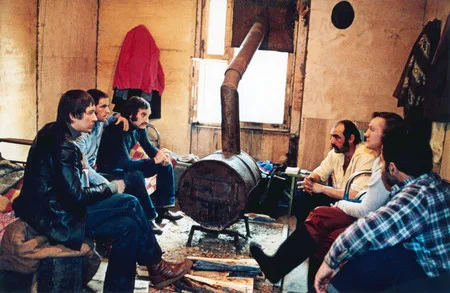
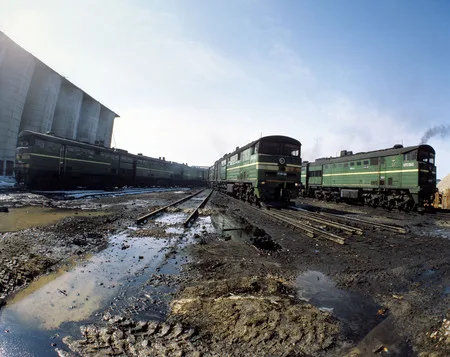
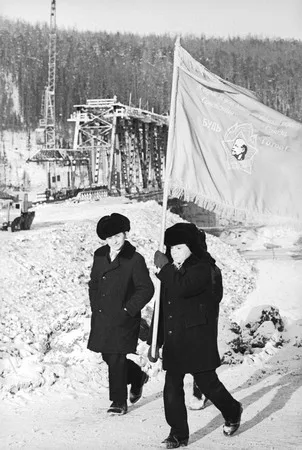
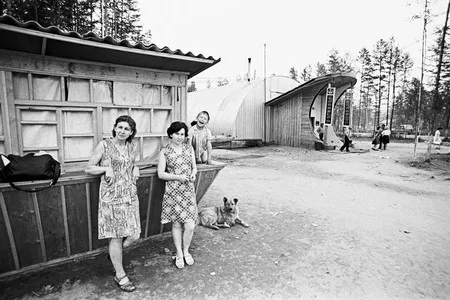
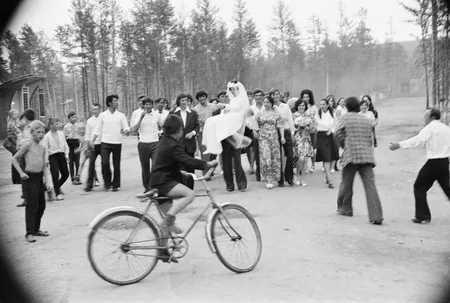
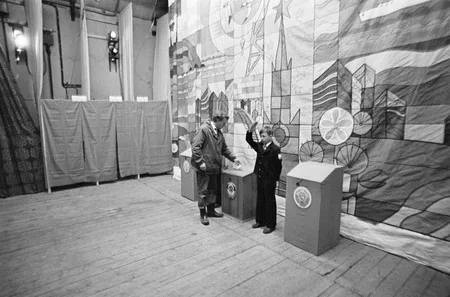
Gennadi Koposov. Constructing a new life. 1978. “Fotosoyuz” agency
BAM: 1930 — 1989
Construction of an alternative route to the Trans-Siberian Railway was first proposed in the late 19th century and given priority during the Russo-Japanese War, but later postponed until resources and technology should prove equal to the task. By the 1930s a shortage of both in the face of insurmountable obstacles had become only a temporary inconvenience, and in 1933 the first government resolution was issued ‘On Construction of the Baikal-Amur Mainline’, with orders for completion within the next three years.
The second stage of this vast building project began in 1974, and for nearly thirty years the rail route represented the State’s most important collective vision of the future. Military personnel laid the mainline from the east, but the Komsomol workers responsible for the second half became the emblem of BAM construction.
At this exhibition BAM is portrayed by eight different photographers. Most of the photographs are by Gennady Koposov and Valery Koreshkov, but we also see the work of Viktor Akhlomov, Dmitry Baltermants and Yury Sadovnikov, with a few prints by Yury Rost, Alexander Abaza and Arkady Shaikhet. They all worked for the Soviet press and were consequently obliged to follow prescribed criteria. After the avant-garde notion of equipping each Red Army soldier with a camera, photomontage became the dominant genre and took precedence over photography for a while. This influenced Soviet documentary photography for many years. The ambivalence of official images can be ascribed to the fact that there was little difference between formal photographs and amateur snapshots of this period. We are not shown the darker side to the romanticism of BAM construction, the disillusionment or the nylon-shirted students in fifty degrees of frost. To some extent there was no demand — the most avant-garde magazine available was ‘Czech Photography’, and the population also practised self-censorship as an extension of official strictures. The driving force of this colossal undertaking was a romanticism that resisted any notion of double-sided reality.
By an iconic and intrinsic sense of heroism BAM relayed the natural and healthy romanticism of ordinary people who enjoyed their work, their understandable enthusiasm and desire to see the fruits of their labour. Although behind this lay the senselessness of unfinished endeavour, demoralisation and poor living conditions. Reaching towards the final goal was intuitive, a personal attempt to bring order to human existence. The visitor is required to reconstruct not only the intolerable everyday problems avoided by documentary photographers, but also personal motivation on a massive scale, a lofty dream that ground to an abrupt halt — like the rails of the BAM mainline.
Where it was shown
Central exhibition hall ManegeMoscowМанежная площадь, д. 1
4—22 November 2009
Supported by